February 3, 2026
Why are some neighborhoods harder to find rental housing in?
6/3/2024
February 19, 2026
February 19, 2026
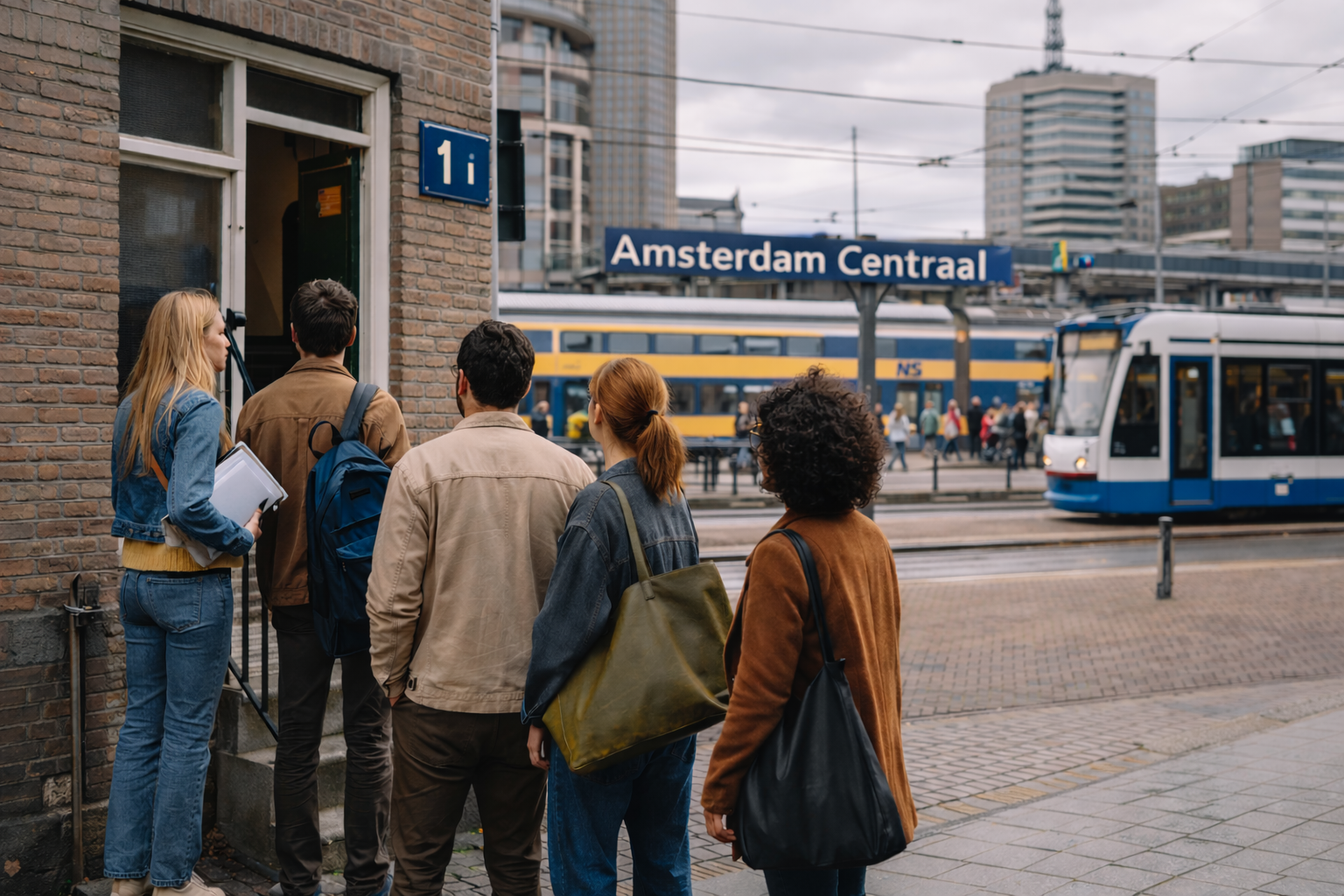
If you have been searching for a rental in the Netherlands, you have probably noticed that difficulty is not evenly spread. In one neighborhood, listings disappear within hours and viewings feel like auditions. A few kilometers away, places sit online longer, and responses think human. That contrast is confusing and frustrating, especially when the harder areas are often the ones you actually want to live in.
What makes certain areas so competitive? Is it just popularity? Price? Reputation? Or is there something deeper going on that is not obvious from the listings? The answer is usually a mix of structural limits, timing, and how people use specific neighborhoods ,not just how they look on a map.
Demand does not spread evenly; it clusters
One of the biggest reasons some areas are harder to rent in is simple: demand clusters. People do not spread themselves evenly across a city. They gravitate toward places that offer a combination of jobs, transport, social life, and convenience. When many people want the same few areas at the same time, competition spikes fast.
In the Netherlands, this clustering is especially strong because cities are compact. A small area can suddenly become “the place to be,” and once that reputation sticks, demand stays high even as prices rise. Hard-to-rent regions are usually not just popular; they are universally popular across different groups.
Access beats size more than most renters expect
Many renters assume central or trendy areas are hardest because they are expensive. Price matters, but access matters more. Areas close to major train stations, business districts, universities, or reliable public transport routes attract renters who do not want to depend on cars or long commutes. That convenience is non-negotiable for many people.
As a result, even small or outdated apartments in high-access areas can attract intense competition. Meanwhile, larger and nicer places slightly further out may struggle to get attention. Ease of daily life often outweighs comfort on paper.
Limited supply magnifies pressure instantly
Some neighborhoods are simply built differently. Historic centers, protected areas, or districts with strict zoning do not change much over time. New housing is limited or slow to develop. That means supply stays fixed, even as population and demand grow.
When supply cannot respond to demand, competition becomes permanent rather than seasonal. This is why certain areas feel “always impossible,” regardless of when you search. The market there has no breathing room.
Reputation creates self-reinforcing pressure
Once an area gains a reputation, good or bad, it tends to stick. Neighborhoods labeled as “safe,” “international,” “up-and-coming,” or “ideal for young professionals” attract renters who have not even visited yet. They apply based on perception.
That perception-driven demand feeds itself. More demand leads to higher prices, which paradoxically reinforces the idea that the area must be desirable. Meanwhile, less-hyped neighborhoods can offer a similar quality of life, but without the same competition, simply because they are not part of the narrative yet.
Certain renter groups concentrate in specific areas
Another reason some areas are harder to rent in is that they serve particular renter groups. Students cluster near campuses. Expats cluster near international offices and schools. Young professionals cluster near nightlife and transport hubs. Families cluster near schools and green spaces.
When a neighborhood aligns perfectly with one of these groups, demand becomes intense and predictable. The challenge arises when multiple groups target the same area. That overlap pushes competition from “busy” to “brutal.”
Landlord behavior changes by area
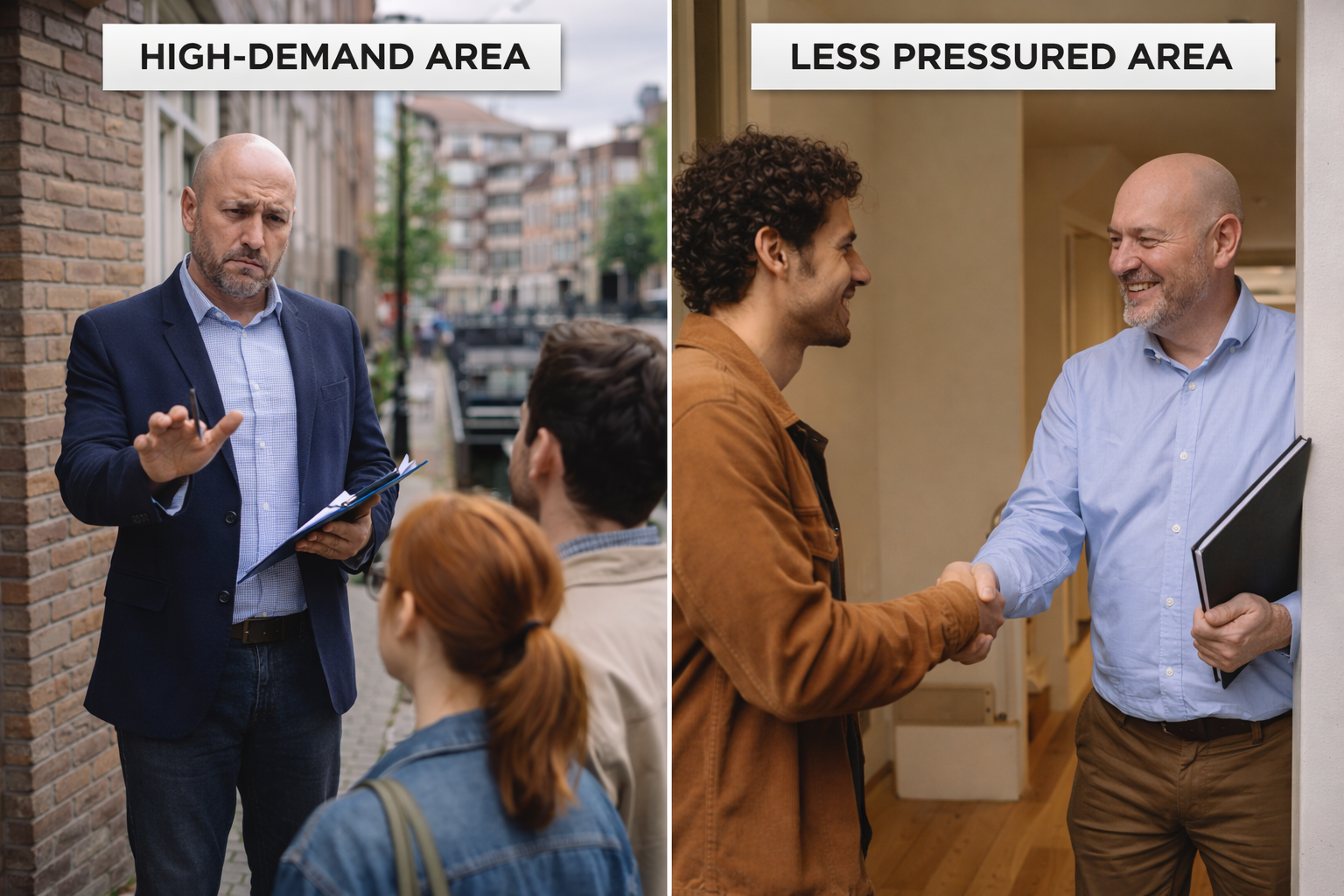
Landlords do not behave the same way everywhere. In high-demand neighborhoods, landlords can afford to be selective, slow, and rigid. They can insist on higher income requirements, stricter profiles, and minimal communication.
In less pressured areas, the same landlord might be flexible, responsive, and open to discussion. This means difficulty is not just about finding a place; it’s about negotiating with a market that knows it holds the upper hand. That power imbalance is most substantial in the hardest areas.
Short-term demand spikes hit some areas harder
Seasonality affects all rental markets, but not evenly. Neighborhoods near universities, business hubs, or international companies experience intense seasonal spikes. Late summer is a classic example, when students and internationals flood specific zones all at once.
Other areas feel this far less. Demand still rises, but not explosively. This is why timing feels more punishing in some places than others. The calendar matters more where demand is already concentrated.
Regulations can unintentionally tighten certain areas
Housing rules and regulations do not affect every neighborhood equally. In some areas, restrictions on short-term rentals, buy-to-let rules, or rent controls reduce the number of available private rentals. While these policies often have good intentions, they can shrink supply in already popular zones.
When fewer rentals circulate, competition increases, even if overall housing numbers have not changed dramatically. The result is pressure that feels sudden but is rooted in long-term structural shifts.
The one pattern most renters overlook
When you zoom out, the hardest areas to rent in usually share a combination of traits. This is the one moment where stepping back and spotting patterns helps.
Areas become especially difficult when they have:
- Strong transport or job access
- Fixed or limited housing supply
- A positive or trendy reputation
- Overlapping renter groups
- Seasonal demand spikes
- Landlords with high leverage
When several of these align, difficulty becomes the norm rather than the exception.
Why “Just move one neighborhood over” sometimes works
Renters often hear advice like “just look slightly outside the center.” Sometimes that advice is useless. Other times, it’s transformative. The difference lies in whether demand actually drops, not just whether the map changes.
Some boundaries matter a lot more than others. A single train stop, a school district line, or a change in zoning can dramatically reduce competition, even if daily life feels nearly identical. Understanding where those invisible borders lie is often more potent than blindly expanding your search.
What usually goes wrong emotionally
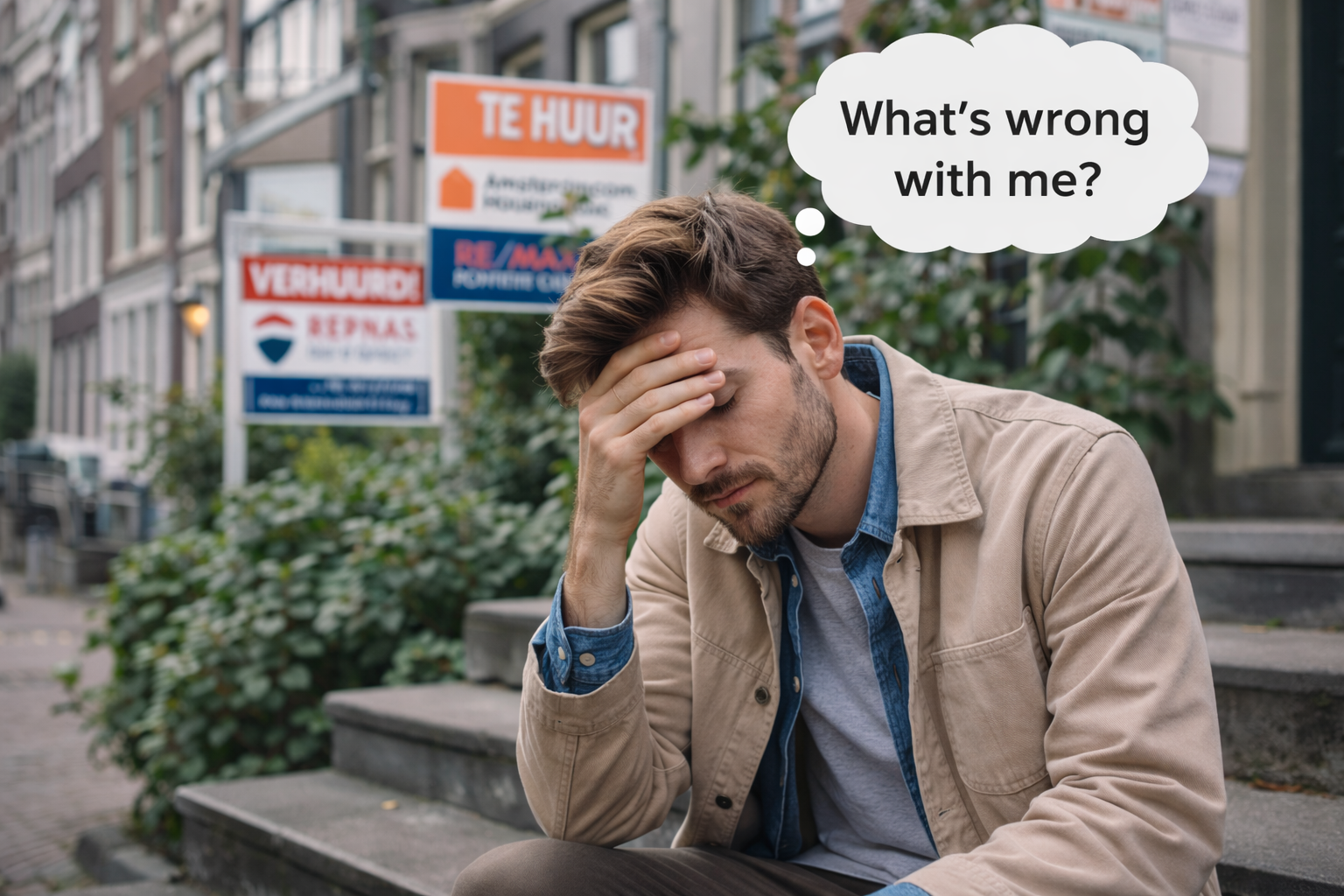
When renters keep targeting the hardest areas, rejection starts to feel personal. You begin to question your profile, your income, your timing, even your worth as a tenant. But the truth is often more straightforward: you are competing in a zone where demand vastly exceeds supply.
No amount of effort guarantees success in those conditions. Recognizing that can be relieving. It shifts the question from “What’s wrong with me?” to “Is this area realistically accessible right now?”
How to use this knowledge without giving up
Understanding why some areas are harder to rent in does not mean you must abandon them entirely. It means adjusting expectations and strategy. That might mean applying faster, accepting fewer conditions, or treating rejections as usual rather than discouraging.
Or it might mean consciously choosing an area where the balance of power is not so skewed, at least temporarily. Housing decisions do not have to be permanent to be smart.
Choosing your battles in a competitive market
Some areas are harder to rent in because too many people want too few homes ,and that imbalance is shaped by access, reputation, regulation, and timing. Once you see that pattern, difficulty stops feeling mysterious or personal. It becomes contextual.
And with that clarity, you are no longer just chasing listings. You are choosing where your energy has the best chance of turning into an actual home, not just another viewing. That shift does not make the market fairer. But it does make navigating it far more manageable.