February 3, 2026
How do I request maintenance without conflict?
22/3/2024
February 19, 2026
February 19, 2026

Asking for maintenance can feel surprisingly awkward. You notice a problem, a leaking tap, a broken extractor fan, a window that will not close properly, and suddenly, you are hesitating. Is this serious enough? Am I being annoying? Will this somehow come back to bite me later?
In the Netherlands, many renters delay maintenance requests longer than they should, not because they do not need the repair, but because they want to avoid tension. Especially if the landlord or agency already feels distant or slow to respond.
The good news is that most maintenance conflicts do not come from what you ask for. It comes from how and when you ask. Once you understand that, requesting repairs becomes far less stressful and far more effective.
Why maintenance requests feel tense for renters
Maintenance sits at an uncomfortable intersection of responsibility and power. You live with the problem every day. The landlord does not. That alone creates a difference in urgency. On top of that, many renters worry about being seen as “difficult,” especially in a tight market where they already feel replaceable.
This fear leads to silence. Silence leads to worsening issues. And by the time you finally speak up, frustration has already built, up on both sides. Conflict usually is not caused by the request itself. The late arrival of the request causes it.
Start with clarity, not blame
One of the easiest ways to avoid conflict is to remove emotion from the first message. Maintenance requests work best when they focus on facts, not frustration. You are not making a complaint about the landlord. You are reporting a condition in the property.
Instead of framing it as something that’s “been ignored” or “never works,” describe what is happening now, when you noticed it, and how it affects everyday use of the apartment. Clear descriptions invite solutions. Accusations invite defensiveness.
Why timing matters more than urgency
Many renters wait until a problem becomes unbearable before reaching out. By then, the message carries stress, even if the words are polite. Reporting issues early does two things. It shows you are attentive and responsible, and it prevents the problem from escalating into something more expensive or disruptive.
From a landlord’s perspective, early reporting is helpful. Late reporting feels risky. You do not need to wait until something breaks completely to mention it.
Written communication protects both sides
Verbal conversations feel friendly, but they are easy to forget or misunderstand. Written requests create clarity without confrontation. A simple written message gives the landlord time to respond thoughtfully instead of reactively. It also makes a record, not as a threat, but as a shared reference.
This is not about legal positioning. It is about avoiding “I thought you said” situations later. Clear records reduce tension far more often than they create it.
Be specific about the issue, not the solution
A common mistake renters make is telling the landlord how to fix something instead of what is wrong. Landlords and agencies often have preferred contractors or processes. When you jump straight to solutions, it can feel like you are taking control rather than asking for help.
Describing the symptom, what does not work, when it started, and what you have noticed leaves room for the landlord to act without feeling challenged. Collaboration feels very different from instruction.
The one structure that keeps things calm
You do not need a long explanation, but a simple structure helps your message land well. This is the one place where being intentional makes a difference.
A calm maintenance request usually includes:
- A neutral description of the issue
- When you first noticed it
- Whether it is getting worse or staying the same
- How does it affect the regular use of the apartment
- Openness about access or timing
This shows you are cooperative rather than confrontational.
Why “just checking in” works better than pressure
If you do not hear back, the instinct is to escalate emotionally. That often backfires. Gentle follow-ups framed as check-ins work far better than reminders that sound impatient. A short message asking whether there is an update keeps the conversation open without raising stakes. Most delays are not personal. They are logistical. Treating them that way keeps the tone constructive.
Separate inconvenience from urgency
Not all maintenance issues are equal, and treating them as if they were can create unnecessary friction. When everything is framed as urgent, nothing is. Landlords are more responsive when they can clearly see what requires immediate action versus what can be scheduled.
Being honest about urgency, without exaggeration, builds credibility. That credibility helps when something is truly urgent later.
Why politeness is not the same as apologizing
Many renters over-apologize when requesting repairs. “Sorry to bother you,” “I hate to ask,” “I know you are busy.” While politeness is good, excessive apologizing subtly shifts responsibility away from where it belongs. Maintenance is not a favor. It is part of providing a livable home.
You can be respectful without minimizing your right to ask. Calm confidence often feels less confrontational than anxious politeness.
What to do when the issue is ignored
If a reasonable amount of time passes without a response, it is okay to become more direct without becoming aggressive. Restating the issue, referencing your earlier message, and asking for a timeframe keeps the conversation focused on resolution, not blame. Conflict usually arises when frustration leaks into tone. Staying factual protects you from that.
Why escalating too fast often backfires
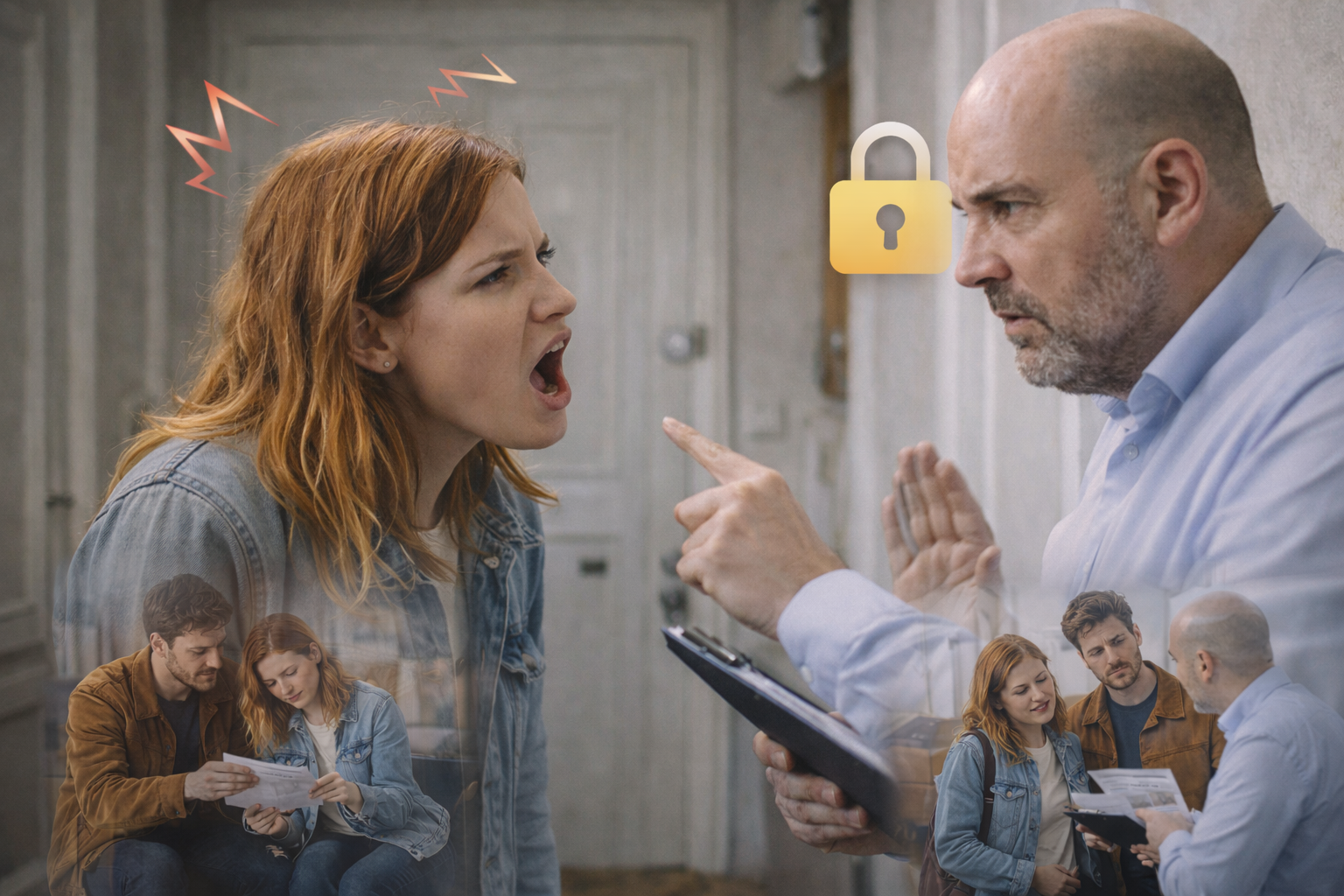
Jumping straight to threats, formal complaints, or emotional language can harden positions unnecessunnecessarily arily. Even wheny in the right, escalation often slows practical outcomes. Most landlords respond better to persistence than pressure, especially early on. Escalation has its place, but it works best when it is built on clear, calm communication first.
What usually goes wrong emotionally
Maintenance issues are stressful because they affect your daily comfort. Over time, that stress can turn small delays into personal frustrations. Renters often carry that frustration into the conversation without realizing it. Landlords then respond defensively, and a simple repair becomes a relationship issue. Recognizing that emotional buildup and releasing it before you write is one of the most effective tools you have for avoiding conflict.
Getting Repairs Done Without the Drama
Requesting maintenance without conflict is not about being passive or demanding. It is about being clear, timely, and calm, even when the situation is not ideal. Most maintenance requests go smoothly when they are treated as shared problems rather than personal failures.
You are not asking for special treatment. You are asking for the home you are paying for to function correctly. And when that request is made early, clearly, and without emotional weight, it is far more likely to be met with cooperation instead of resistance.