February 8, 2026
Why should you measure doorways beforehand before moving furniture?
17/2/2026
February 21, 2026
February 21, 2026

Measuring doorways beforehand often feels like an unnecessary precaution, something sensible people mention but rarely actually do. Boxes look flexible, furniture looks manageable, and everything seems like it will “probably fit.” On moving day, that assumption is put to the test. In Dutch homes, especially, where doorways, staircases, and corridors are often narrower than expected, failing to measure can turn a routine move into a series of awkward standoffs between furniture and architecture. Understanding why doorway measurements matter explains why this small step prevents some of the most stressful moving-day surprises.
Threshold limits
Furniture dimensions are easy to measure, but doorways define the actual physical limits of your move. Frames, hinges, and handles often reduce usable space more than people realize during a quick visual inspection. Moves often fail at these thresholds rather than in open rooms because of narrow clearance. Measuring every doorway ensures that reality replaces assumption before the heavy lifting begins on moving day. People often overestimate doorway sizes based on daily familiarity with their own living space. This visual judgment is notoriously unreliable and leads to overconfidence that can cause significant delays during a time-sensitive move.
Relying on exact facts provides the certainty needed to reduce last-minute improvisation. Measuring provides a solid foundation for planning, preventing stuck furniture or accidental damage to your walls.
Architectural constraints
Many Dutch buildings feature narrow doors and tight corners that leave very little margin for error. Even newer constructions prioritize space efficiency over generous access, making architectural awareness a vital part of your plan.
Acknowledging these specific constraints avoids discovering them when it is already too late. Grounding your plan in what is actually possible ensures a much smoother transition through difficult stairwells and entries. Whether to dismantle furniture is a decision that is often made much too late in the process. Measuring doorways in advance allows you to make this choice calmly instead of reacting to a problem mid-move.
Accurate dimensions allow professional movers to rotate or tilt items safely without using brute force. This level of preparation replaces stress with predictable handling, saving both time and physical effort for everyone.
Elevators and stairwells add constraints
Doorways are rarely the only bottleneck. Elevators and stairwells introduce additional limits that affect furniture movement. Ignoring these shared access points can create delays and disrupt schedules. Measuring in advance ensures all stages of the move are feasible and reduces costly surprises.
Planning for these constraints helps moves stay on track and keeps stress lower throughout the day.
Overconfidence increases stress
When furniture gets stuck unexpectedly, stress rises instantly. Schedules slip, tempers flare, and solutions feel urgent rather than thoughtful. Measuring beforehand replaces surprise with acceptance, even when the news is inconvenient. This preparation reduces emotional escalation and keeps the move manageable. Moves involve helpers, partners, or professionals. When items do not fit, blame often surfaces: who assumed, who measured, who decided? Accurate measurements before the move remove this tension. Clear expectations preserve cooperation during a demanding day.
It prevents minor frustrations from becoming interpersonal conflicts. Being off by just a few centimeters can stop progress entirely. Furniture does not compress, and doorways do not expand. Precision feels excessive until the moment it matters. Measuring respects the unforgiving nature of physical space. These small checks prevent major disruptions mid-move.
Packaging adds to dimensions
Furniture measurements often exclude packaging, padding, or protective wrap. These additions increase size just enough to cause problems. Accounting for them during measurement avoids surprises when wrapped items suddenly no longer fit.
This foresight saves time, energy, and unnecessary stress. In a new home, visual familiarity is absent. Rooms may feel larger or smaller than they truly are. Measuring replaces guesswork with certainty. It bridges the gap between expectation and reality before any movement begins.
Early measurement ensures the move starts on solid ground. When items do not fit, solutions cost money extra labor, dismantling, storage, or return trips. Measuring is inexpensive by comparison and prevents these additional costs from ever arising. The savings appear as avoided expenses rather than direct discounts.
Stress impairs problem-solving
Once furniture is stuck, decisions happen under stress. Fatigue and urgency reduce creativity and effectiveness. Measuring beforehand allows calm, deliberate planning. Decisions made with clarity are almost always better than reactive choices.
Preparation increases efficiency and reduces mishaps. Measuring doorways rarely feels urgent. Its value becomes obvious only when skipped. Understanding why it matters helps treat it as foundational rather than optional. Early measurement ensures the move avoids preventable complications. Whether furniture arrives whole, dismantled, or damaged is often determined before the move begins. Accurate measurements guide these decisions and set realistic expectations for handling.
This step shapes the outcome of the entire move. Without measurements, compromises happen under pressure. Furniture gets scratched, walls chipped, or items abandoned. Measuring allows decisions to be made calmly and with alternatives still available. Preparation protects both property and relationships.
The task is small, the impact is large
Measuring doorways takes only minutes but influences the entire move. The imbalance between effort and benefit is why it matters so much. Few tasks offer such a large return on such a small investment. Early measurement ensures smoother, safer, and less stressful relocation.
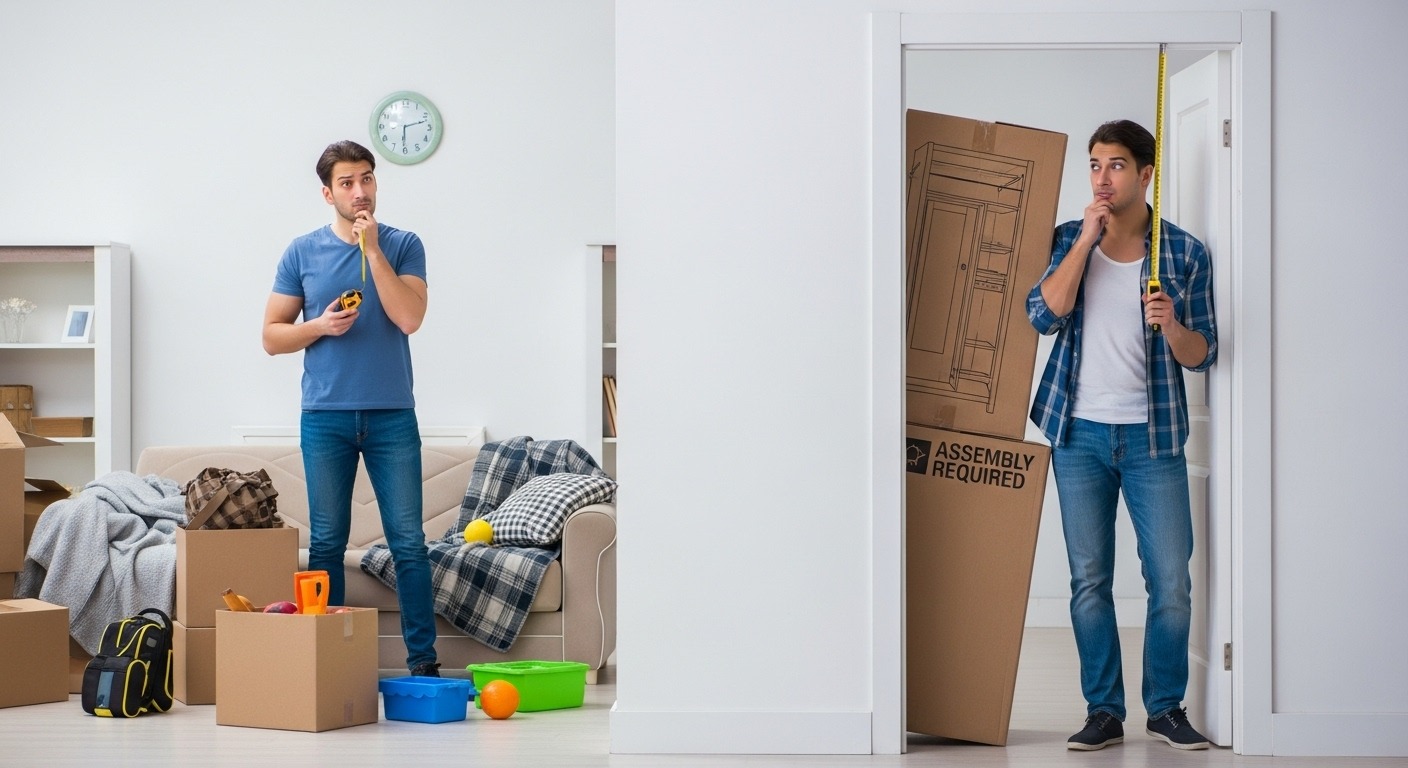
Doorways are gatekeepers
Every item must pass through them. No matter how well packed or transported, doorways decide entry. Measuring acknowledges their role rather than challenging it.
This early step sets the tone for a smoother move. Uncertainty makes moves stressful. Measuring replaces guesswork with information. Even when the results are inconvenient, knowing in advance stabilizes the process. It is always easier to act on facts than to react under pressure.
Move flows when access is predictable
When access points are understood, items move smoothly, decisions are clear, and energy is preserved. Measuring doorways beforehand supports this flow quietly and effectively.
Preparation allows the day to proceed without unnecessary friction. Measuring doorways is not about caution or pessimism. It is about acknowledging physical limits. Early recognition of constraints turns the move into a logistical process rather than a series of confrontations with reality. In tight spaces, this respect often decides whether the move feels controlled or chaotic.