February 8, 2026
How do I pack without forgetting the most important things?
27/10/2023
February 8, 2026
February 8, 2026

Whether you're heading for a business trip in Singapore, a hiking vacation in the Alps, or moving abroad in 2026, the stress of packing remains a universal challenge. The feeling that you've forgotten something crucial as soon as the front door locks behind you is familiar to many. In an era where we are increasingly mobile, but also increasingly dependent on specific technology and documentation, a strategic approach to packaging is essential. In 2026, packing is no longer about packing as much clothing as possible into a suitcase, but about curating equipment that offers flexibility and security.
Preventing packing stress starts well before the suitcase is physically on the bed. It is a process of categorization, verification and the smart use of modern tools. In this article, we'll analyze the most effective methods to pack without having any unpleasant surprises upon arrival.
The power of the digital and physical master list
In 2026, we will be making massive use of smart packaging apps, but the basis remains a well-structured list. A common mistake is making a list on the day of departure. For a watertight system, start with a “mental dump” at least one week in advance.
Divide your list into three non-negotiable categories:
- The Holy Trinity: Passport/ID, payment methods (physical and digital) and smartphone. Without these three things, you can solve almost any other problem by 2026 by buying or arranging it on site.
- Health and hygiene: Prescription medication, a basic first aid kit, and personal care products you can't easily find at your destination.
- Technology and Connectivity: Charging cables, world plugs and power banks. In a digitized world, an empty battery often equals a lost day.
The “Outfit method” versus loose garments
One of the reasons why people forget essentials or carry too much unnecessary stuff is that they think in terms of loose clothing (“I'll bring five shirts”). In 2026, the most efficient method is packing based on complete outfits and activities.
Prepare a full set, including underwear and socks, for each day of your trip. Take a critical look at whether garments can be combined with each other (the so-called capsule wardrobe). By thinking in sets, you're less likely to forget the specific belt that goes with those pants, or the right socks for your hiking boots. Don't forget the “layering rule”. Even in hot climates, air conditioning or an unexpected rain shower in 2026 could throw a spanner in the works. By being prepared for extremes within your planned outfits, you minimize the chance of having to make local purchases.
Smart compartmentalization: Packing cubes and airtags
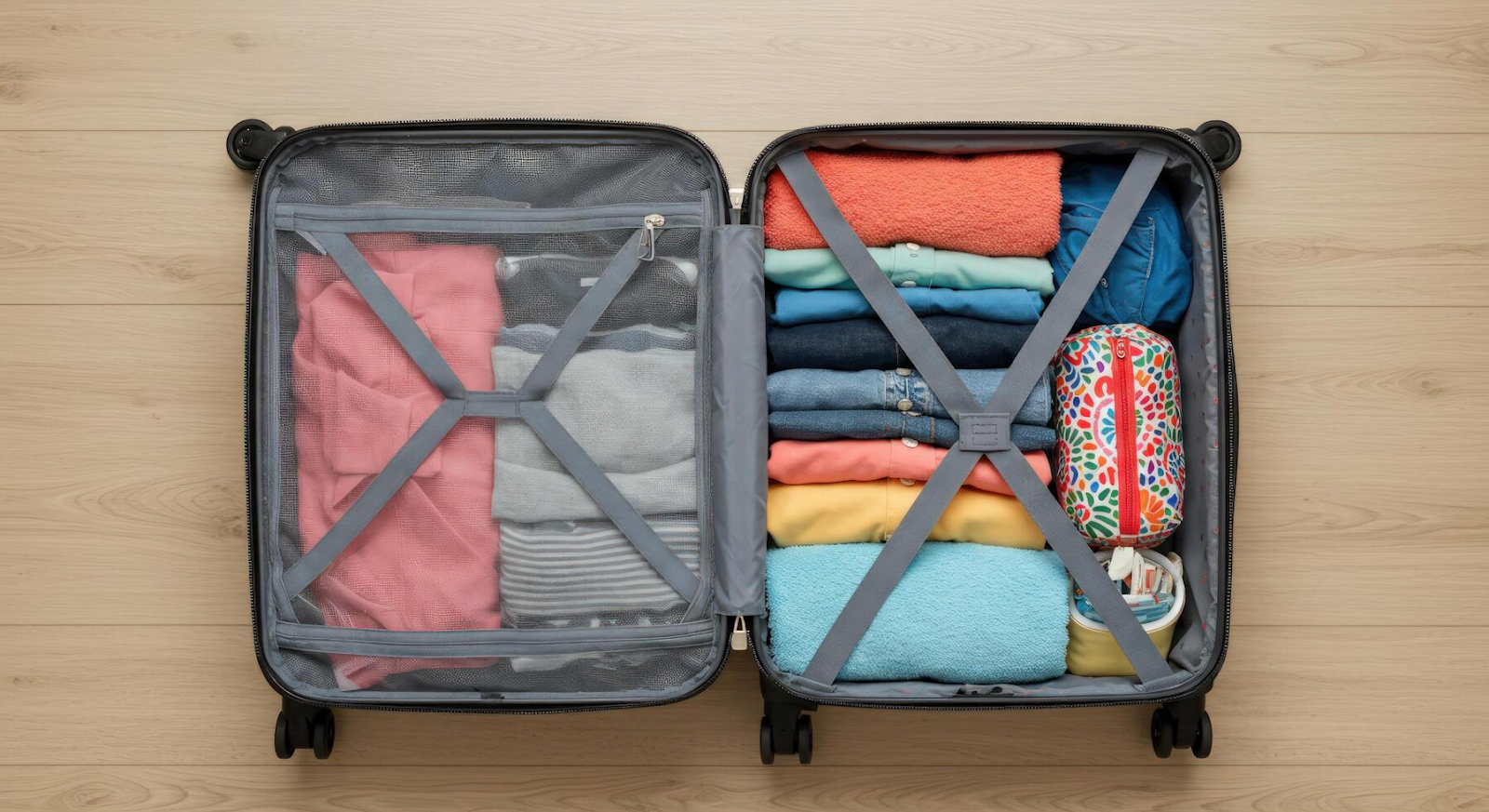
In 2026, the chaos of an unorganized suitcase will be a thing of the past thanks to compartmentalization. The use of packing cubes (packing organizers) is not only useful for order, but also serves as a visual checklist. When you reserve one cube for electronics and one for toiletries, you can see at a glance whether a category is complete.
In addition, adding a Bluetooth tracker (such as an AirTag) to your most important bags became the standard in 2026. While this doesn't prevent you from forgetting to pack something, it protects you from 'forgetting' your entire luggage during a transfer or in the taxi. It offers a psychological rest that is essential for a smooth travel experience. Compartmentalization also forces you to give each item a fixed spot; if the fixed spot for your medication is empty, it is immediately noticeable during the last check.
Cloud-based and paper-based documentation
Although we will do almost everything with our smartphone in 2026, complete dependence on digital carriers is a risk. Forgetting backups is a common packing error.
Provide a hybrid system:
- Digital: Store scans of your passport, visas, insurance policies, and booking confirmations in a secure cloud environment that is accessible offline.
- Physical: Bring one folder with printed copies of your most important documents and a list of emergency numbers. In the event of theft or a faulty phone in 2026, this folder is your lifeline. Physically collecting these documents also reminds you to check that your passport is still valid long enough for your specific destination.

The “Last minute box” and the bathroom check
The most forgotten things are often the things we use until the very last minute: toothbrushes, eyeglass repair kits, chargers that are still plugged in and daily medication.
An effective technique in 2026 is to create a “Last-Minute Box” or a specific side flap in your bag that stays open until the time of departure. Make a list that you put on the front door with only the items that can't go into the suitcase until the day of departure. Just before departure, walk through the bathroom and kitchen one more time. Are all plugs out of the wall? Are there no more glasses on the bedside table? This systematic final round is the ultimate protection against forgetting everyday necessities that are not on a standard packing list but are essential to your comfort.
Weight and prohibited substances
Nothing is more annoying than finding out at the check-in counter in 2026 that your suitcase is too heavy, so you have to throw away or transfer items in a hurry. This often leads to losing overview and accidentally leaving important items at the airport.
Weigh your suitcase at home with a digital luggage scale and take into account the stricter airline rules in 2026 when it comes to liquids and batteries. Lithium batteries almost always have to be in hand luggage, while liquids over 100 ml (unless the airport has CT scanners) are still banned. By pre-arranging these logistical matters, your mental space remains free to focus on the contents of your baggage instead of on the carrier's rules. A well-packed bag is one that not only contains everything, but also meets the requirements of the trip itself.