February 3, 2026
Why is healthcare inextricably linked to housing?
3/7/2023
February 8, 2026
February 8, 2026

In the Netherlands in 2026, the debate about public health has drastically changed. Where we used to see health primarily as something that took place within the walls of a hospital or a doctor's office, policy makers, doctors and housing associations now recognize a fundamental truth: your home is your most important medicine. In 2026, the connection between housing and health care will no longer be a theoretical concept, but the basis of the integrated care policy.
The quality, stability and location of a home largely determine our physical and mental resilience. In this article, we explore the deeper reasons why the housing market and the healthcare sector grew closer than ever in 2026.
The physical home as a source of health
In 2026, a home is much more than just a roof over your head; it is a protective shell. When that shell has defects, the resident's health often shows the same.
- Indoor environment and respiratory tract: Research in 2026 confirms that a significant proportion of chronic respiratory problems, such as asthma and COPD, are directly related to poor ventilation, mold and moisture in homes. Investing in home insulation and modern ventilation systems is now seen as a preventative care intervention that saves millions in hospital costs.
- Heat and climate stress: Due to rising temperatures, homes that are not “heat-resistant” are an immediate danger for vulnerable elderly people. In 2026, tackling heat stress in urban areas will be a priority for public health, as cool homes drastically reduce heat-related deaths and heart problems.
Mental health and home stability
The psychological impact of the housing market will be one of the biggest factors in mental health care (mental health care) in 2026. Housing insecurity, the fear of not being able to pay rent, or the stress of having to move constantly are a primary source of chronic stress.
Chronic stress due to housing problems weakens the immune system and increases the risk of depression and anxiety disorders. In 2026, mental health institutions will work more closely with housing associations because they understand that treatment for burnout or depression is pointless if the patient lies awake every night from impending homelessness or unaffordable energy costs. “Housing first” became the guiding principle in 2026: only when the basic need for a safe home has been met can medical recovery be worked on effectively.
Longer living at home and the “Healthcare appropriate home”
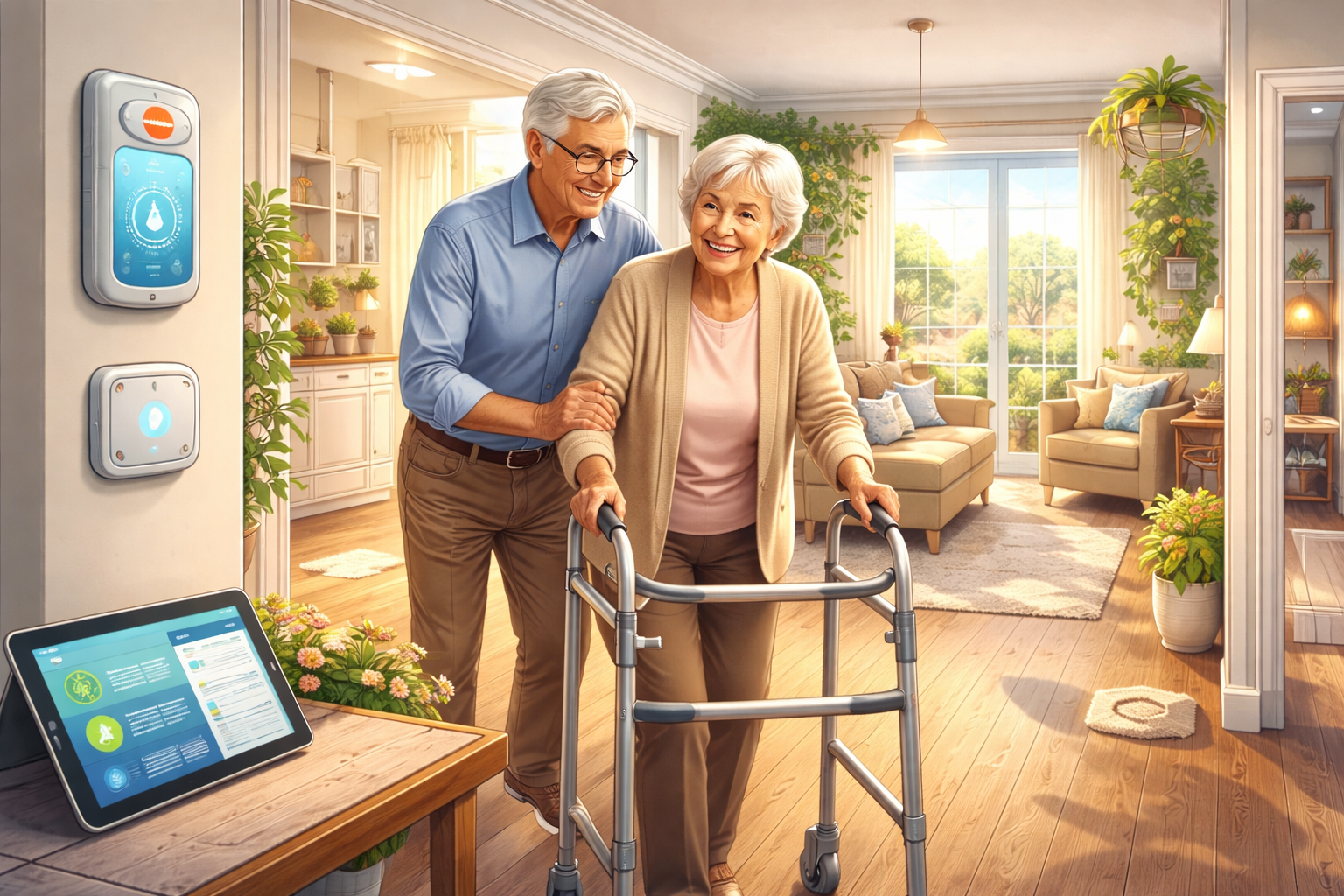
Due to an ageing population, the pressure on nursing homes rose to a boiling point in 2026. Government policy is now fully focused on allowing people to live independently at home for as long as possible. However, this is only possible if the home is “suitable for care”.
In 2026, we will see the rise of the “residential care zone”. These are neighborhoods where the physical environment (barrier-free homes, wide sidewalks, good lighting) seamlessly meets healthcare needs. A home that has been adapted with fall prevention and smart home technology (e-health) prevents thousands of hip fractures per year. As a result, the home has actually become an extension of the healthcare institution, with the boundary between “living” and “care” almost completely blurred.
Socioeconomic health inequalities
The place where you live will still determine how old you will be in 2026. There is a shocking difference in life expectancy between residents of disadvantaged neighborhoods and affluent neighborhoods. This is not just due to individual choices, but to the “social determinants of health”.
Neighbourhoods with little greenery, a lot of particulate matter and a high concentration of fast food chains encourage unhealthy behavior and physical decline. In 2026, the connection between health care and housing is also a fight against inequality. By investing in healthy neighborhoods, with parks, sports facilities and healthy food environments, municipalities are trying to close the care gap. A healthy neighborhood lowers the threshold for movement and encounter, which is essential for preventing loneliness, one of the biggest “silent” health crises of 2026.

The financial synergy: Healthcare real estate in 2026
From 1 January 2026, more money has been made available for the so-called Normative Housing Component (NHC) in long-term care. This means that healthcare institutions have more financial space to invest in the quality and sustainability of their real estate.
The idea behind this is simple: a sustainable, safe and modern building reduces the operational costs of healthcare. Less absenteeism among staff due to a healthy work environment and faster patient recovery through a pleasant indoor climate ensure a healthy business case. In 2026, the quality of healthcare real estate will therefore be seen as a direct indicator of the quality of the care provided.
Integral cooperation and the future
In 2026, the 'gaps' between the budgets of municipalities (Wmo), health insurers (Zvw) and housing associations will disappear. People realize that one euro spent on a stairlift or mold control saves two euros on emergency care.
This integrated approach means that in 2026, we will more often see a general practitioner issuing a “home prescription”: a referral to a residential coach or a technical adjustment in the home, instead of just medication. The connection between health care and housing has thus become the cornerstone of a sustainable society where we not only live longer, but also live healthier.