February 7, 2026
Long-term maintenance costs Buying versus renting in 2026
5/8/2022
February 7, 2026
February 7, 2026
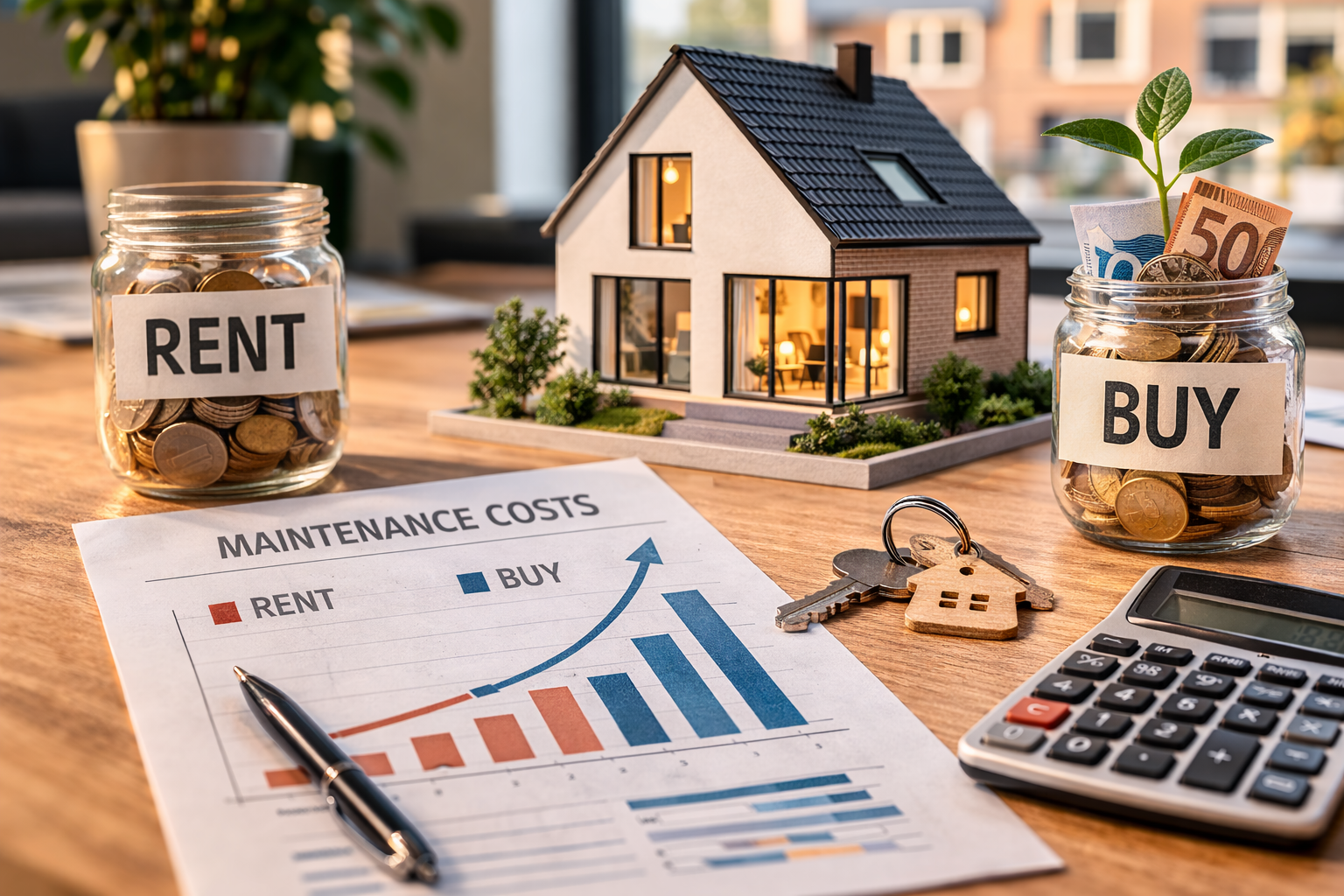
In the current housing market of 2026, we often talk about rising rents or the level of mortgage rates. But if you really want to get a grip on your financial future, you need to look beyond the monthly charges. The real “silent thief” of your assets, or rather its protector, are the maintenance costs.
In the long run, the difference in maintenance costs between buying and renting is the foundation of your financial planning. At a time when building materials are more expensive than ever and the energy transition places compelling demands on homes, it is essential to understand how these costs will develop over 10, 20 or 30 years.
The calculation for the buyer: The “1% standard” in 2026
As a homeowner in 2026, you are responsible for maintaining your property. The rule of thumb is that you should set aside an average of 1% of the rebuilt value of your home for maintenance every year.
- Preventive maintenance: Think of painting (every 5-7 years), cleaning the ventilation systems and maintaining the heat pump.
- Corrective maintenance: Unexpected issues such as a leak in the roof or a faulty solar panel inverter.
When we look at this over a period of 30 years, you see that maintenance is not a linear line, but a series of “peaks”. The roof may need to be renewed in year 15; in year 20, the bathroom. In 2026, the average maintenance costs for a single-family home of €500,000 will be approximately €5,000 per year. So in 30 years, we're talking about an investment of €150,000, excluding inflation.
The tenant: Worried, but at what price?
For the tenant, the math is simple: maintenance costs are included in the rental price. This offers tremendous financial peace of mind and predictability.
- No peak costs: If the boiler or shared heat unit goes down in 2026, the bill is up to the landlord.
- The hidden indexation: Although the tenant does not receive direct maintenance notes, these costs are of course included in the annual rent increase. In 2026, we see that landlords often link the maximum statutory rent increase to the increased costs of management and maintenance.
The sustainability factor: The big change
In 2026, there was a crucial difference between “regular maintenance” and “sustainability investments”. This is where the long term gets really interesting.
The buyer as investor
A buyer who invests in insulation and an A++++ energy label sees their maintenance costs change over time. Modern systems are more complex (such as HRV units and hybrid installations), but they significantly increase the market value of the home. In 2026, a well-maintained, energy-efficient home will be a liquid asset that pays for itself when sold.
The tenant and the label gap
Tenants in 2026 in homes with a poor energy label (E, F, G) are out of sorts. Although they do not pay for the insulation, they do pay the top price for the energy bill. The landlord has fewer incentives to become more sustainable as long as the home can still be rented out, which in the long term can make the total housing costs for the tenant higher than those of a buyer.
Long-term cost overview (30-year projection)
Over a period of thirty years, homeowners typically face a wide range of maintenance and property-related costs that renters do not pay directly. Routine maintenance such as painting, servicing the central heating system, and maintaining outdoor spaces like gardens can accumulate to roughly €45,000 over the long term. In addition, major maintenance projects may arise, including roof replacement, window frames, and technical installations, which together may total around €80,000 over several decades. Many homeowners also choose to modernize their property during this period, for example by renovating the kitchen or bathroom, which could add approximately €50,000 depending on preferences and timing.
There are also ongoing municipal charges for property owners, including the owner’s share of local taxes such as OZB, which may amount to around €30,000 over thirty years. Homeowners also carry the financial risk of unexpected structural issues such as foundation problems or serious leaks, which can create additional costs that are difficult to predict. When these elements are combined, the estimated long-term spending on maintenance, modernization, and related ownership costs could reach roughly €205,000. Renters usually do not pay these expenses directly, as they are typically covered by the landlord, although such costs may be indirectly reflected in rent levels.
Foundation issues: The black hole for the buyer
We can't get around the foundation crisis in 2026. For buyers in areas with fluctuating groundwater levels (such as parts of the Randstad and Friesland), maintenance has become a risky game in the long term.
Warning: Where a tenant simply cancels his rent and moves in the event of foundation problems, a buyer can be faced with a cost of €60,000 to €100,000. This does not fall under regular maintenance and can evaporate the entire excess value of a home.
The VvE: An intermediate form
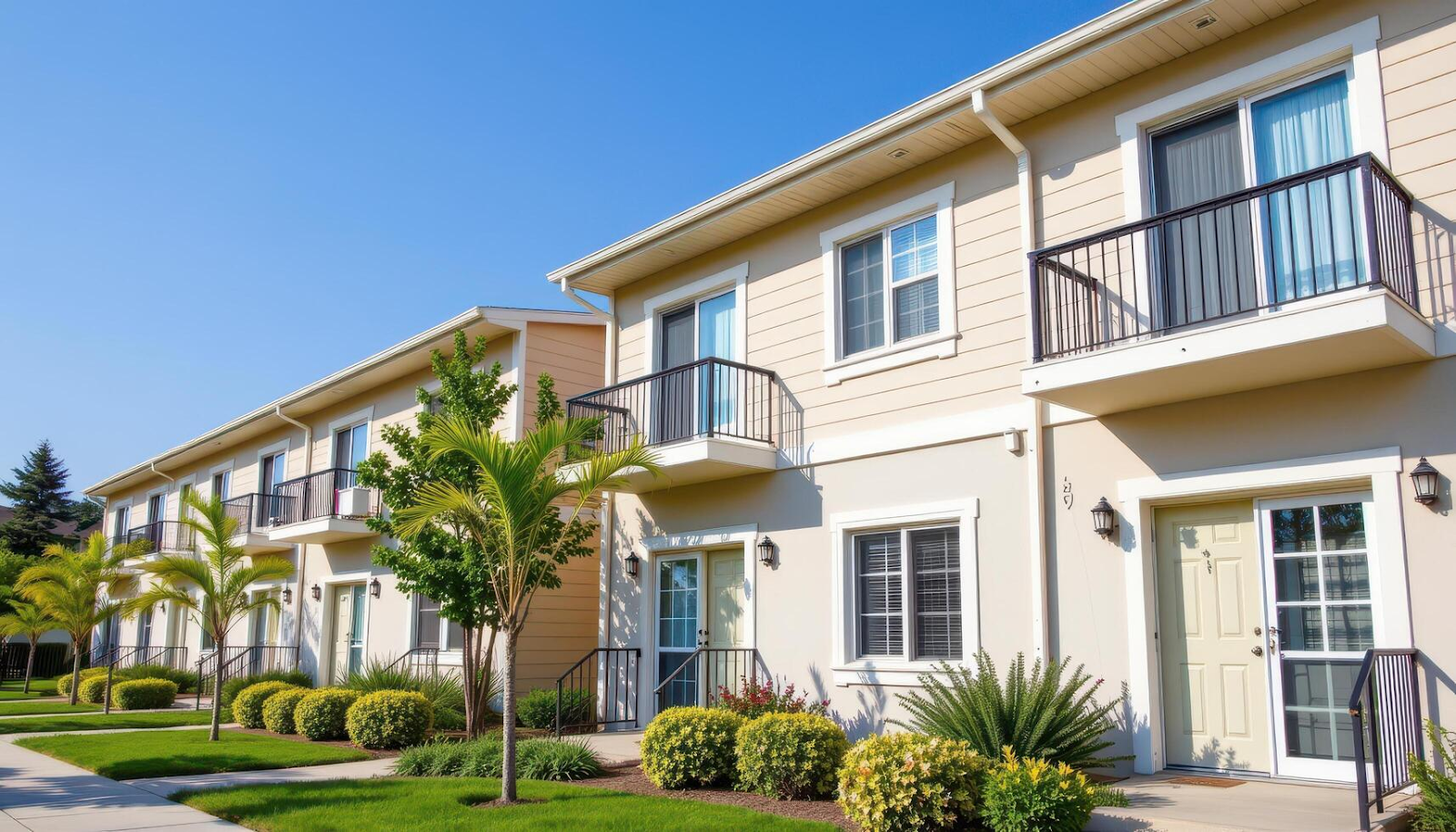
For those who buy an apartment in 2026, maintenance is carried out by the Owners Association (VvE). This is similar to renting in terms of predictability (you pay a fixed monthly contribution), but you remain the owner and therefore responsible for additional investments if the reserve fund fails to make the complex more sustainable, for example.
Key insights: Who will win in the long run?
The comparison between maintenance costs when buying and renting is a trade-off between risk and return.
- The tenant pays for security. In the long term, the maintenance costs are €0, but you are not accruing any assets and you are at the mercy of the indexation of the rent, which indirectly reflects the landlord's maintenance costs.
- The buyer takes a risk. Maintenance costs are substantial and can be erratic. However, in 2026, we will see that a well-maintained home represents an enormous capital gain after 30 years that more than offset the maintenance costs incurred.
Practical advice for 2026
- Check the source data: Use tools like Ockto to see if you still have enough monthly space after deducting the “1% maintenance standard”.
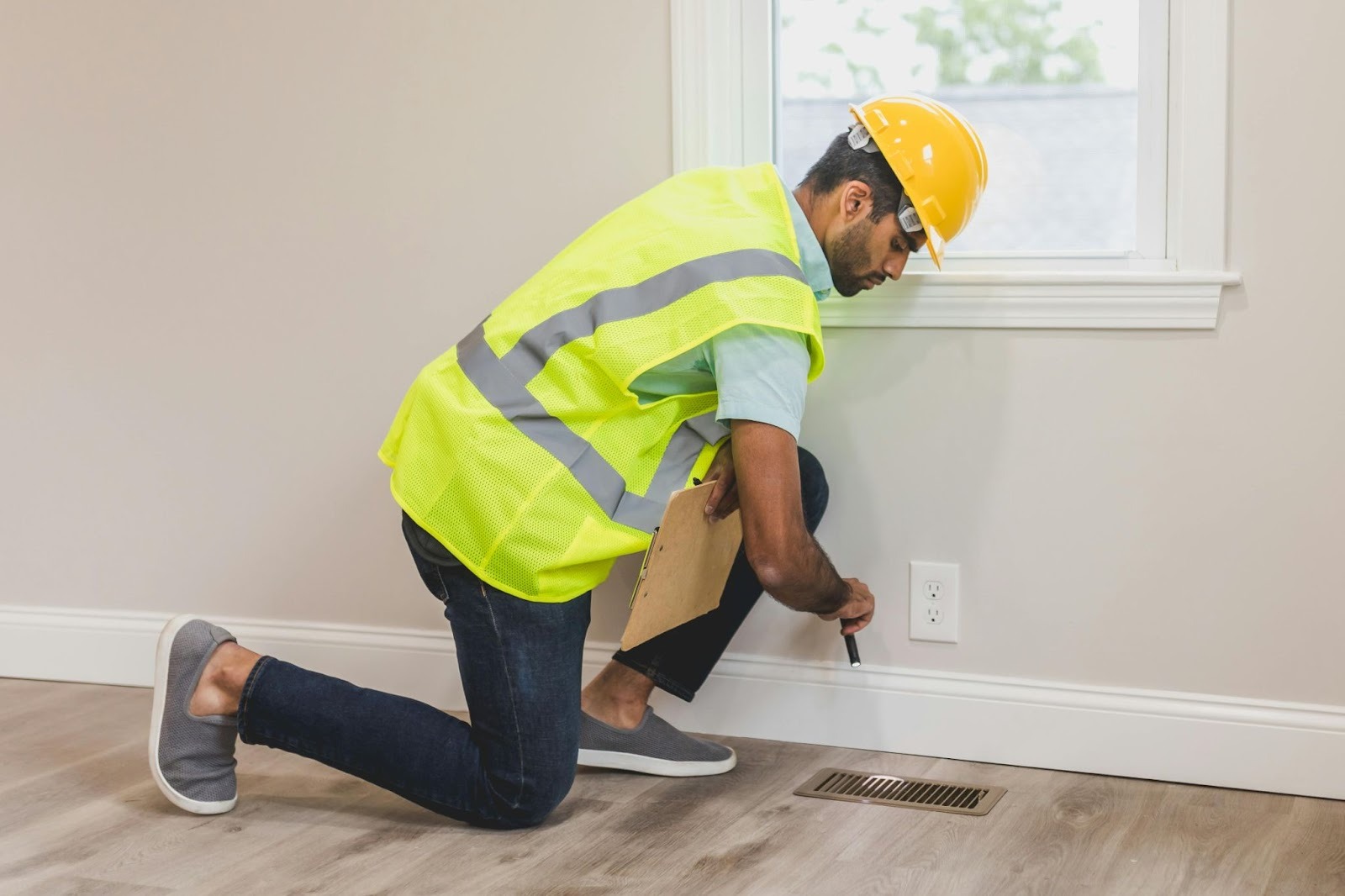
- Architectural inspection: In 2026, this will be your most important document. It tells you exactly what maintenance peaks you can expect in the next 10 years.
- NHG buffer: When you buy with NHG, you are better protected, but the maintenance costs remain at your own expense. Make sure you have a solid “maintenance piggy bank”.