February 7, 2026
How do utility bills add up monthly?
23/5/2025
February 20, 2026
February 20, 2026
If you are renting or buying in the Netherlands, utility bills often feel unclear until the first invoices arrive. By that point, many people realize their monthly costs are higher, or at least different, than expected. Utilities rarely come as one single figure. Instead, they build up through several separate charges that together form the real monthly cost of living in a home.
Understanding how these bills add up month to month removes uncertainty and makes budgeting far less stressful, especially in a housing market that already demands careful planning.
Utilities are usually split across multiple providers
One of the first surprises for many people in the Netherlands is that utilities are almost never bundled into a single bill. Electricity and gas are usually supplied by one commercial provider (e.g., Vattenfall, Eneco), while water is strictly regional and billed separately by companies like Waternet or Vitens.
Internet and television are handled by a third category of providers like KPN or Ziggo. This separation makes it harder to estimate total monthly costs at first glance, as you are managing three or four different contracts, each with its own billing cycle and administrative login.
Energy costs fluctuate more than expected
Electricity and gas make up the largest share of your utility budget. In 2026, while supply rates have stabilized, an average household (2,500 kWh electricity and 1,100 m³ gas) can expect to pay roughly €180 to €220 per month, depending heavily on the home’s energy label.
Even with a fixed monthly payment, your actual consumption is calculated during the annual "eindrekening." Because of 2026 policy shifts increasing gas taxes by €0.027 per m³ and decreasing electricity taxes homes still relying on gas for heating will see more volatile cost shifts than those with full electric systems.
Internet and television add steady monthly expenses
Internet is effectively a basic utility in the 2026 Dutch household. Most basic fiber or cable packages cost between €35 and €55 per month, often including a television component or streaming perks.
These costs are the most "honest" part of your utility budget because they are fixed and do not change based on how much data you consume. However, many providers charge a one-time connection fee of roughly €25 to €35 when you first move in, which can be an annoying "hidden" cost during your first month of residency.
Apartment service costs may include utilities
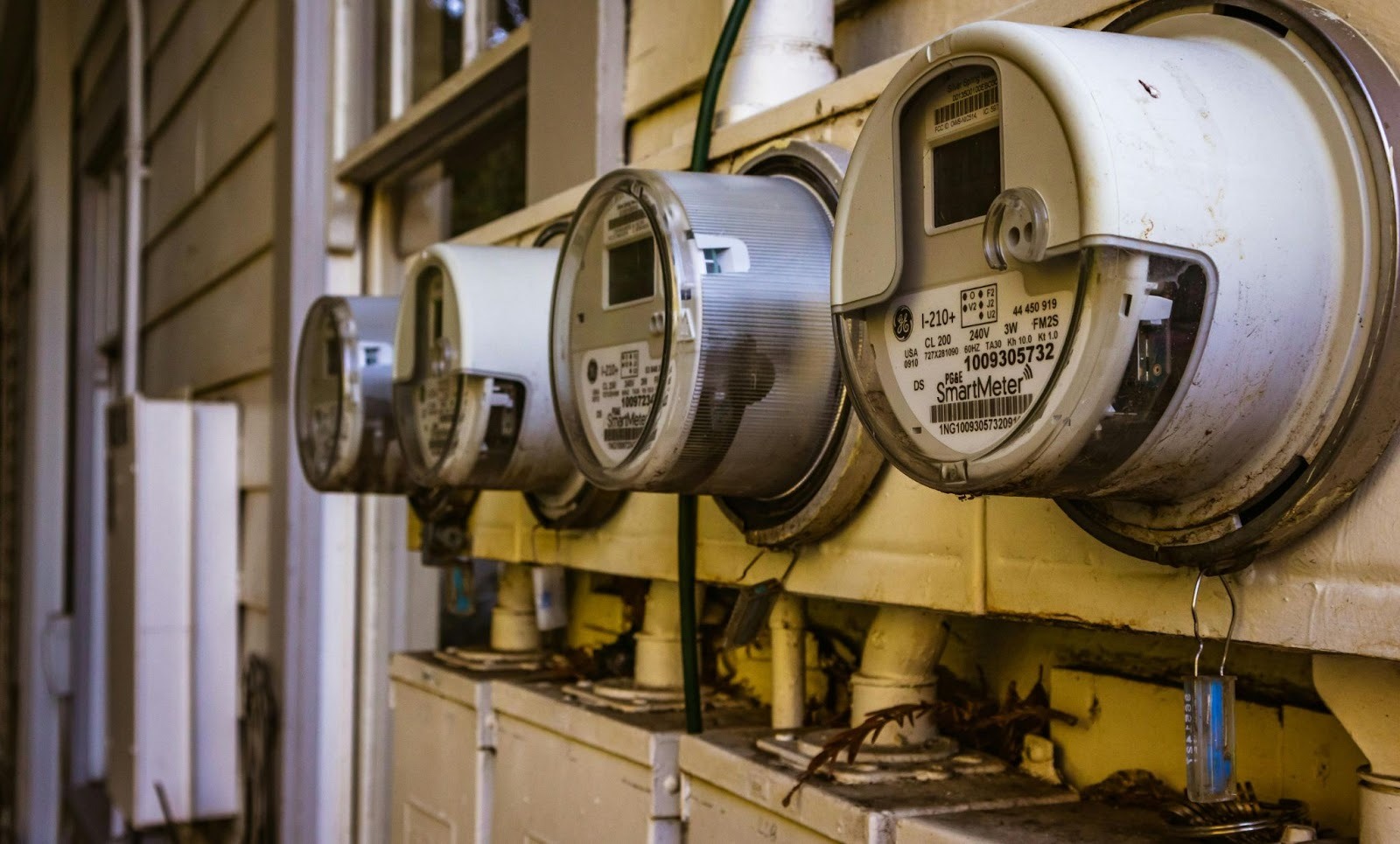
In some rental properties, especially apartment buildings, utilities are partly included through service costs (servicekosten). These charges often cover shared heating systems (block heating), water, or electricity in common areas like hallways and elevators, which are paid as a monthly advance.
While this can simplify your monthly bill management, it often reduces transparency. It is harder to track your individual consumption when costs are pooled across the building. Remember that "included costs" do not automatically mean lower costs; if your neighbors keep their radiators on high, you may still see a significant "annual settlement" bill in 2026.
Seasonal variation distorts monthly perception
Utility costs are not evenly distributed throughout the year, as Dutch winter months drive the majority of gas and heating consumption. If you move into a property in June and base your budget on those summer bills, you are likely to be caught off guard by the sharp rise in November.
Averaging expenses across all seasons is the only way to get an accurate financial picture. In 2026, even though gas prices have stabilized to roughly €1.15–€1.24 per m³, the increased tax on gas means that heating a poorly insulated space in January is significantly more expensive than it was just a few years ago.
Single-person households feel utilities more strongly
Utility costs do not scale evenly with the number of people in a home. Many components of your bill such as the fixed "grid operator costs" and the standing supply charges remain exactly the same whether one or two people occupy the space.
This makes per-person expenses notably higher for single occupants, who can expect to pay around €133–€150 per month for combined utilities in 2026. Couples and families benefit from shared costs and better thermal efficiency, often seeing their "per-head" utility burden drop as the fixed costs are divided across a larger group.

Newer homes feel cheaper month to month
Modern homes often come with lower utility costs. Better insulation, energy-efficient appliances, and newer heating systems reduce monthly usage, even if rent or purchase prices are higher. Over time, these savings improve predictability and partially offset housing costs. The most accurate understanding of utility expenses appears after twelve months.
Only then does the comparison between advance payments and actual usage become clear. Many people only fully understand their real utility costs after receiving their first annual settlement.
Why utilities feel confusing at first
Utility bills combine estimates, seasonal changes, and delayed corrections. This makes monthly figures feel abstract rather than final. Once it becomes clear that bills involve prediction followed by adjustment, the system feels more understandable and less arbitrary. Utility bills in the Netherlands are billed in layers rather than a single charge. Energy, water, internet, and service costs all play a role, with energy being the most variable over time.
Monthly advances provide structure, but annual settlements reveal the full picture. When utilities are viewed as part of a yearly cycle instead of isolated monthly numbers, budgeting becomes easier, and surprises become far less common.