February 5, 2026
Why do some homes sell faster than others?
30/4/2024
February 19, 2026
February 19, 2026

If you have been watching the Dutch housing market for a while, you have probably noticed something puzzling. One home appears online and is marked “sold” within days. Another, seemingly similar one, sits there for weeks or even months with little movement. At first glance, it’s tempting to assume the fast-selling homes are simply better. Nicer kitchen, better finish, more charm. Sometimes that’s true, but often it isn’t.
In the Netherlands, how quickly a home sells has less to do with how attractive it looks at first glance and more to do with how well it fits the market at that exact moment. Speed is usually a signal of alignment, not perfection.
Price positioning matters more than the absolute price
One of the biggest drivers of how fast a home sells is not whether it’s cheap or expensive, but whether it’s priced correctly for its segment. Homes that sell quickly are often priced just below a psychological threshold. This attracts a larger pool of buyers, creates more competition, and increases the chance of multiple bids. The result is momentum.
Homes that linger are often priced based on what the seller hopes to get, not what the market is currently willing to pay. Even a small mismatch can slow everything down. In the Netherlands, buyers are extremely price-aware. When a price feels “off,” interest drops immediately, even if the home itself is solid.
Timing and market rhythm play a bigger role than people expect
The Dutch housing market has a rhythm. Certain periods are more active, others are more cautious. Homes that enter the market during high-demand moments, such as early spring or right after summer, often sell faster simply because more buyers are actively searching.
Listings that appear during quieter or uncertain periods can struggle, even if they would have sold quickly a few months earlier. This doesn’t mean timing guarantees success. But good timing amplifies everything else working in a home’s favor, while bad timing exposes even small weaknesses. Speed is often seasonal, not structural.
Homes that reduce buyer doubt move faster
Fast-selling homes tend to answer questions before buyers even ask them. Clear information, realistic photos, transparent energy performance, and straightforward layouts all reduce uncertainty. Buyers don’t need to imagine how things might work; they can see it.
Homes that sell slowly often create doubt. Ambiguous descriptions, missing details, awkward layouts, or unclear costs force buyers to think harder. In a competitive market, hesitation is enough to push them toward another option. Buyers don’t just buy homes. They buy confidence.
Location is not just about the city; it’s about daily life
Everyone knows location matters. What’s less obvious is how it matters. Homes that sell quickly are usually well aligned with daily routines. They are near strong public transport, practical cycling routes, schools, or work hubs. Even if they’re not in the most popular neighborhood, they make everyday life easy.
Homes that linger are often in places that look fine on a map but feel inconvenient in practice. A longer walk to the station. A less intuitive bike route. Poor connections at peak hours. In the Netherlands, where daily movement shapes quality of life, this kind of friction slows sales more than people realize.
Layout often matters more than size
Many buyers assume larger homes always sell faster. In reality, layout often outweighs square meters. Homes that use space efficiently, have logical room flow, usable storage, and flexible rooms appeal to more people. Buyers can quickly imagine living there.
Homes with awkward layouts, even if they’re technically larger, limit the buyer pool. If people can’t easily see how their life fits into the space, they hesitate. Fast sales usually happen when buyers don’t need to mentally redesign the home.

Energy efficiency quietly influences speed
Energy performance has become a bigger factor in recent years, even when buyers don’t explicitly mention it. Homes with better insulation, modern heating, and reasonable energy labels feel safer financially. Buyers worry less about unpredictable costs and future upgrades.
Homes with poor energy performance don’t necessarily fail to sell, but they often take longer. Buyers factor in renovation stress, winter discomfort, and rising energy costs. Even if it’s not the headline reason, energy efficiency often determines which of two otherwise similar homes is chosen.
Presentation sets expectations, not just interest
A professional presentation doesn’t just attract clicks. It sets expectations. Homes that sell quickly often look honest and coherent online. The photos match reality. The description reflects what you actually see during the viewing. That alignment builds trust immediately.
Homes that look too staged or overly edited can backfire. When reality doesn’t match expectations, buyers feel misled, even if the home is objectively fine. Trust speeds up decisions. Disappointment slows them down.
Seller strategy influences buyer urgency
Some sellers actively create momentum. They set clear viewing windows, communicate deadlines, and signal that decisions will be made quickly. This doesn’t pressure buyers; it focuses them. Buyers know where they stand and what’s expected of them.
Other sellers are vague. Viewings are spread out. Decisions are delayed. Communication is inconsistent. That uncertainty reduces urgency and weakens emotional engagement. Homes often sell faster when the process itself feels decisive.
Homes that match a clear buyer profile move fastest
Fast-selling homes usually fit a specific buyer group very well. A starter apartment that’s affordable and well-located. A family home near schools and green space. A compact city apartment close to work hubs. These homes don’t try to be everything; they are clearly something.
Homes that try to appeal to everyone often end up appealing to no one in particular. They sit in the middle, waiting for the “right” buyer. Clarity of audience speeds up sales.
Emotional response still matters, but later than people think
Emotion does play a role, but not at the beginning. Fast sales usually happen when rational criteria are met first: price, location, layout, and costs. Once those boxes are ticked, emotion takes over, pushing the buyer to act quickly.
Homes that rely solely on emotion struggle when the fundamentals aren’t aligned. Buyers may like them, but not enough to commit fast. Emotion accelerates decisions only after logic feels safe.
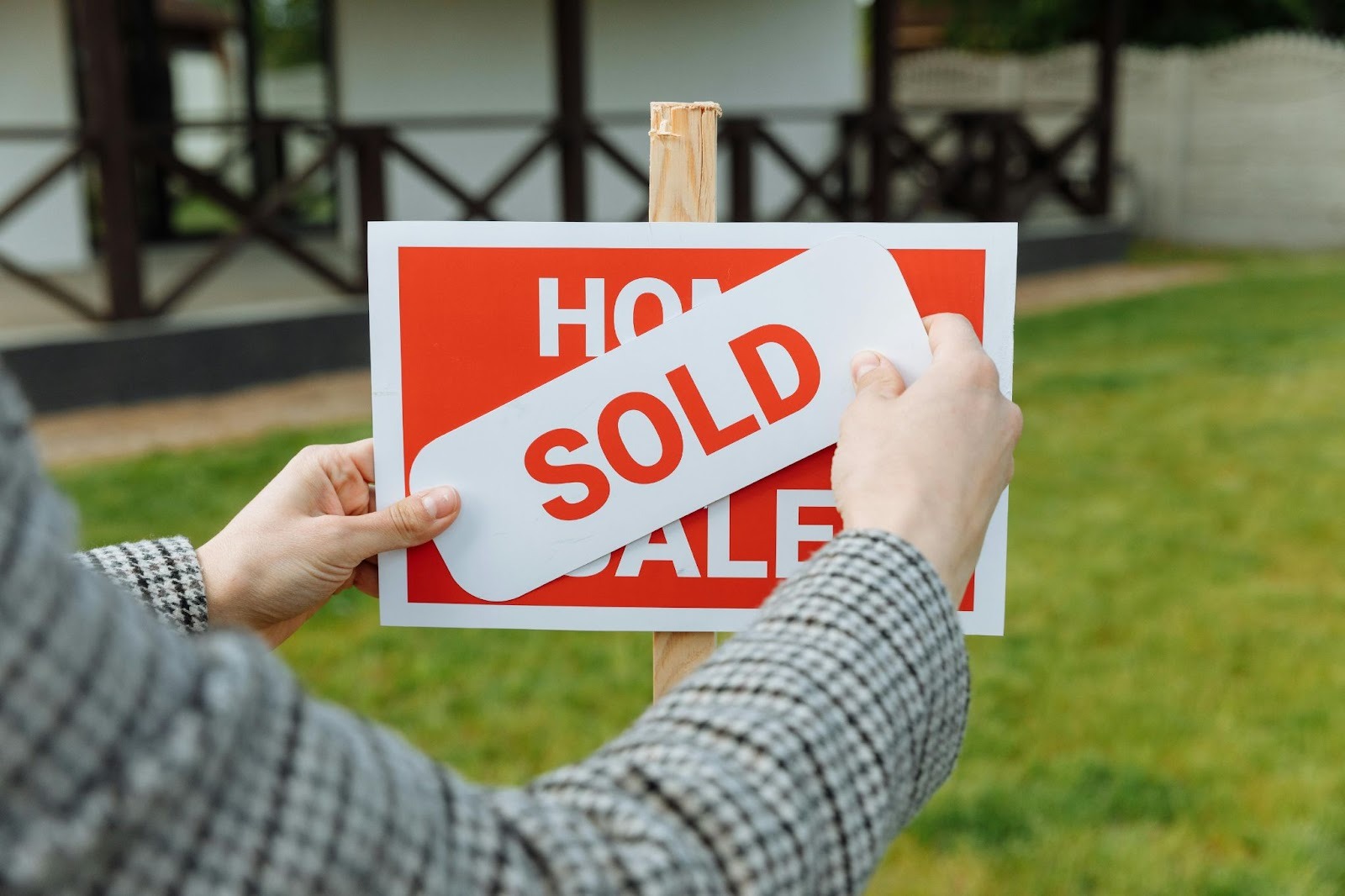
Why “great homes” sometimes still sell slowly
This is where many sellers get frustrated. A home can be objectively nice and still sell slowly if it’s slightly misaligned with market expectations. Maybe it’s priced just above a key threshold. Maybe it appeals to a very narrow group. Maybe it entered the market at a cautious moment.
Slow sales don’t automatically mean something is wrong with the home. They often mean the fit isn’t optimal right now. Speed is context-dependent.
What buyers often misinterpret about fast sales
Buyers sometimes assume fast-selling homes are always overbid aggressively or snapped up unfairly.
In reality, many fast sales are simply the result of clear positioning. When a home makes sense quickly, buyers don’t wait to see “what else comes along.” Slow homes often invite comparison. Fast homes close the conversation.
Reducing hesitation to find your fit
Some homes sell faster than others, not because they’re perfect, but because they align smoothly with buyer expectations, market timing, and daily life needs. Price positioning, clarity, layout, location convenience, and confidence all work together to reduce hesitation. When hesitation disappears, speed follows.
Understanding this helps buyers avoid chasing hype and helps sellers focus on alignment instead of blame. In the Dutch housing market, speed is rarely about luck. It’s about fit, at the right moment, with as little doubt as possible.