February 8, 2026
Why do language barriers slow housing search?
29/8/2025
February 20, 2026
February 20, 2026
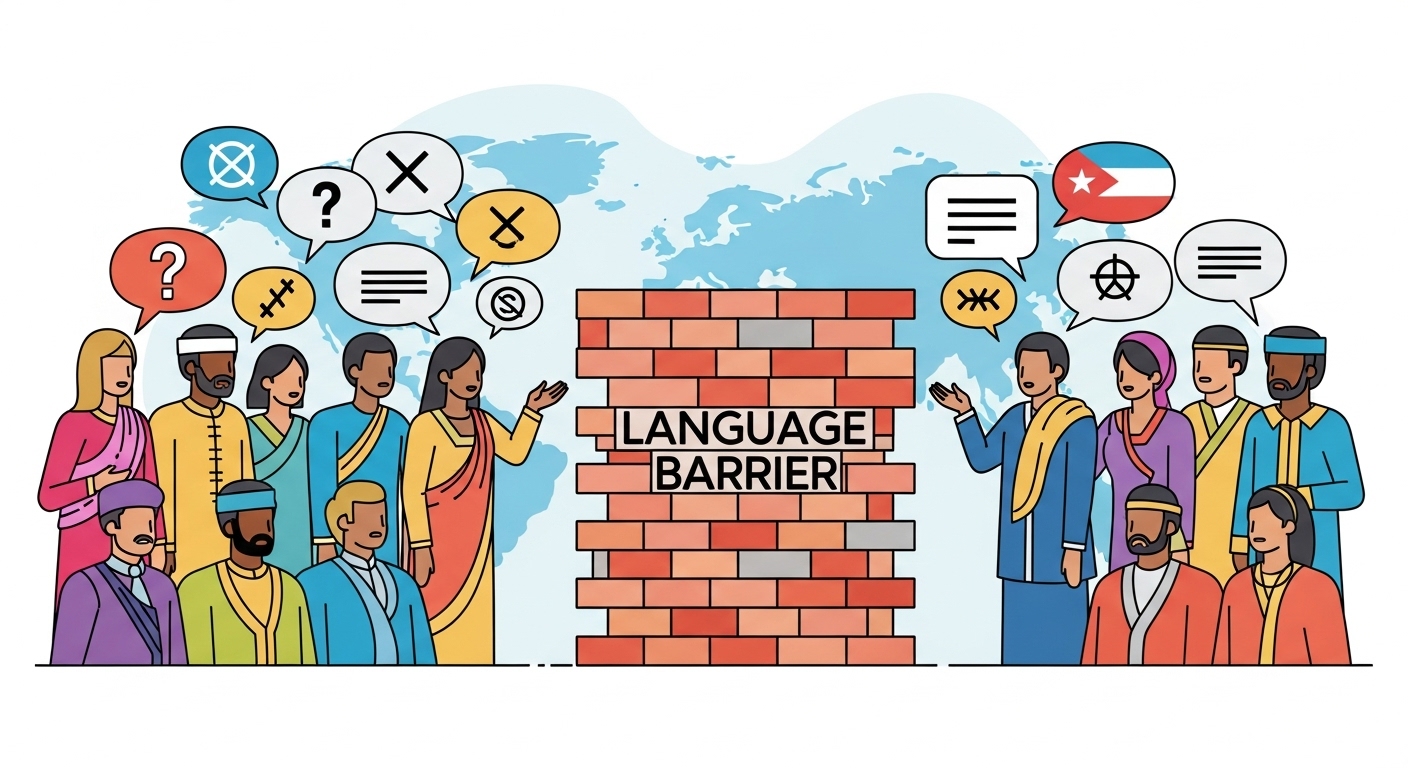
Language barriers rarely feel like the main problem at the start of a housing search. When you are looking for a place in the Netherlands, the pressure usually comes from scarcity, competition, and timing. Language feels secondary, something you can work around with translation tools or help from others. What many people discover over time is that language does not block access outright, but it slows everything down just enough to matter in a market where speed is often decisive.
Information is filtered before you even see it
A large part of the housing market operates through Dutch-language platforms, local networks, and informal communication. Listings written only in Dutch often contain more detail, appear earlier, or are shared within local circles before they reach English-language channels.
When you rely on translated or international platforms, you often see a filtered version of the market rather than the full picture. This delay reduces choice before the search has properly begun.
Nuance gets lost in listings and responses
Housing listings are rarely neutral descriptions. They contain implied expectations about tenant profiles, contract terms, and suitability. When you read them through translation, the nuance disappears. Phrases that signal flexibility, urgency, or restriction may not translate clearly. As a result, applicants either miss opportunities that might have worked for them or apply to properties where their profile was never a realistic fit. This creates wasted time and emotional energy on both sides.
In competitive rental markets, response time matters. When messages need to be translated, checked, or rewritten, replies take longer. Even small delays can push an application down the priority list. From the landlord or agent’s perspective, faster communication often signals reliability and ease of coordination. Language barriers do not signal unreliability, but they do slow interaction in a way that affects how applications are perceived.
Viewings become more stressful and less effective
During group viewings, conversations move quickly. Questions are asked and answered on the spot, often in Dutch, and details are shared verbally rather than in writing. When you are processing information in a second language, it is harder to absorb everything, ask follow-up questions, or react confidently.
The viewing becomes more about keeping up than evaluating whether the home actually fits your needs, which weakens decision-making.

Contracts feel riskier when the language is unfamiliar
Rental contracts are dense even for native speakers. When they are written in a language you do not fully command, uncertainty increases. People hesitate longer, ask for clarifications, or seek external help before signing. Each step adds time. In a fast-moving market, hesitation can mean losing the opportunity entirely, even when the terms are standard and widely used.
Most agents handle multiple listings and large volumes of applicants. Under pressure, they tend to choose paths that minimize friction. When communication requires more explanation or clarification, even unintentionally, it becomes less attractive in a competitive environment. This is not usually personal or discriminatory; it is a response to workload. Language barriers increase friction, and friction reduces priority when demand is high.
Informal reassurance is harder to access
Much of the housing process relies on informal reassurance rather than formal explanation. A quick comment, a short phone call, or a casual confirmation often resolves uncertainty for local renters. When language is a barrier, these informal channels are less accessible. Everything becomes more formal, slower, and more effortful. The process stretches out not because rules are unclear, but because reassurance takes longer to obtain.
Mistakes take longer to correct
Small misunderstandings are common in any housing search. When language barriers exist, identifying and correcting these mistakes takes more time. A misinterpreted requirement or missed document may only become visible later in the process. By the time it is clarified, the opportunity may already be gone. These delays compound, creating a sense that progress is constantly being undone.
People often seek advice from colleagues, friends, or online communities. When that advice is based on Dutch-language processes or terminology, applying it accurately requires additional interpretation. What sounds simple in explanation becomes complex in practice. This gap between advice and execution slows momentum and increases uncertainty, especially for first-time renters navigating the system.
Emotional confidence is affected by language strain
Searching for housing already involves rejection and uncertainty. When every interaction requires extra effort, confidence erodes more quickly. People second-guess their messages, hesitate to follow up, or avoid asking questions out of fear of misunderstanding. This self-censorship slows the search and reduces engagement, even when opportunities exist.
On their own, language barriers are manageable. In a relaxed market, they would rarely be decisive. In a tight market, however, they amplify every other pressure. Scarcity, competition, and rigid timelines leave little room for delay. What might be a minor inconvenience elsewhere becomes a significant obstacle when timing is critical.
Progress feels uneven rather than blocked
One of the most frustrating aspects of language barriers is that progress does not stop completely. It becomes uneven. Some interactions go smoothly, others stall unexpectedly. This inconsistency makes it difficult to assess what is working and what is not. The search feels unpredictable, even when the underlying rules are stable.

Over time, familiarity reduces friction
As people spend more time in the system, patterns become clearer. Common phrases, document expectations, and response rhythms start to make sense. The language barrier does not disappear, but its impact lessens. This gradual improvement explains why housing searches often feel hardest at the beginning and more manageable later, even if market conditions remain unchanged.
Understanding the role of language reduces self-blame
Many people interpret slow progress as personal failure, assuming they are doing something wrong. In reality, language barriers slow housing searches by adding friction to a process that already rewards speed and familiarity. Recognizing this does not remove the obstacle, but it reframes the experience. The difficulty lies not in effort or intent, but in navigating a system where language is part of how access is managed.
Language barriers slow housing searches because they interact with timing, communication, and expectation-setting at every step. They do not prevent access outright, but they reduce momentum in a market that values speed above all else. Understanding this helps explain why the process feels harder than expected, even when everything seems to be done correctly. In a system built on quick decisions and implicit knowledge, even small delays carry weight, and language is one of the most consistent sources of those delays.