

February 7, 2026
Why are down payments a barrier for many?
26/8/2024
February 20, 2026
February 20, 2026
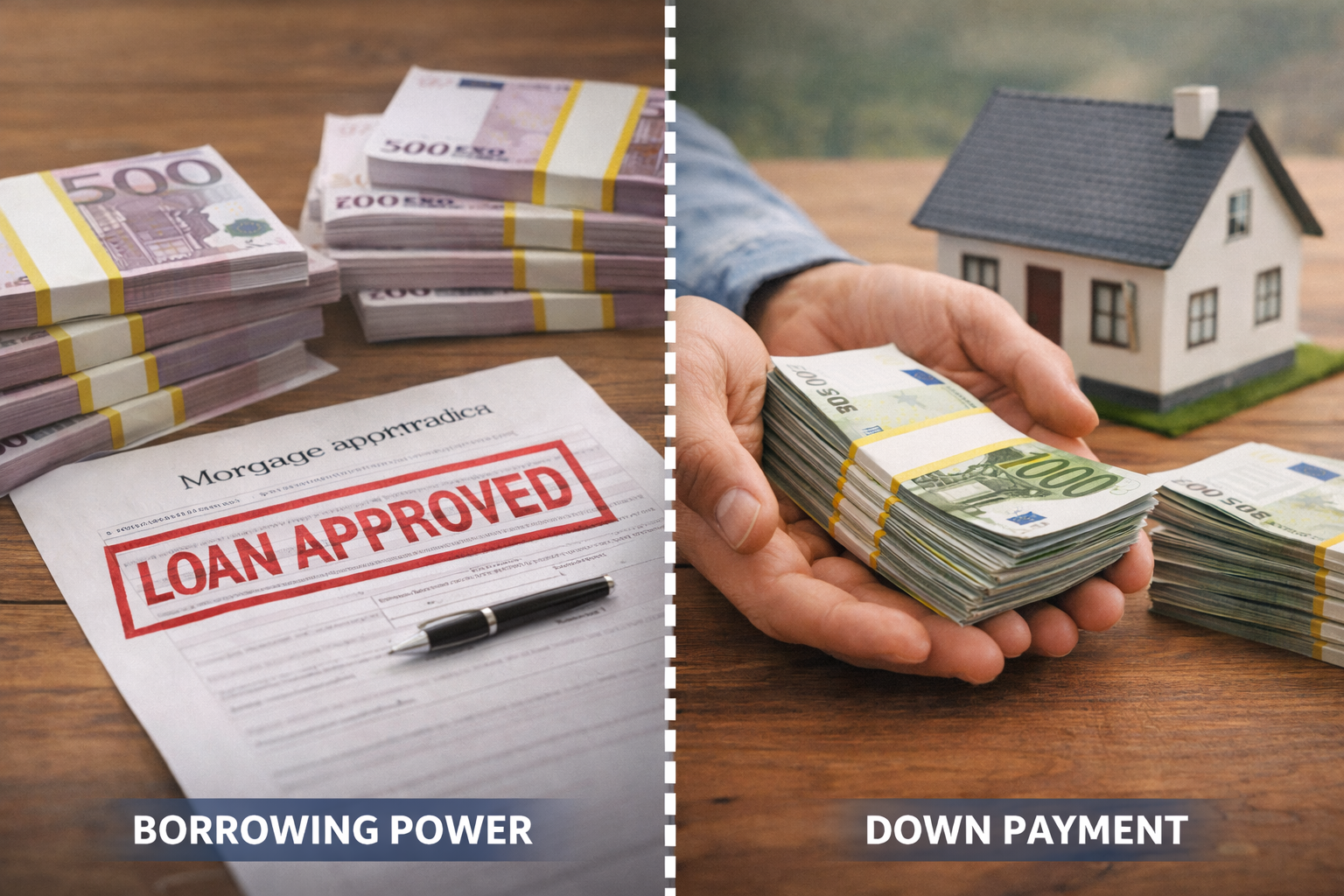
For many people in the Netherlands, the biggest obstacle to buying a home isn’t monthly affordability. It’s the moment before ownership even begins: the down payment and upfront costs. You can have a stable income, solid prospects, and still feel stuck on the outside of the housing market looking in.
Down payments aren’t just a financial hurdle. They intersect with timing, inequality, and life stage in ways that quietly exclude large groups of people. Understanding why they’re such a barrier helps explain why buying feels achievable for some and almost impossible for others.
Down payments require cash, not borrowing power
In the Netherlands, you can typically only finance up to 100% of a home's market value through a mortgage. This means that all associated "buyer's costs" (kosten koper) must be paid in cash from your own savings. In 2026, these costs generally range between 4% and 6% of the purchase price.
For an average Dutch home priced at €505,000, you would need approximately €20,000 to €30,000 in liquid savings just to complete the transaction. While a high income increases your borrowing capacity, it is your accumulated cash that serves as the ultimate gatekeeper for market entry.
Saving competes with rising living costs
Saving for a down payment is a significant challenge when basic living expenses consume a large portion of your income. In early 2026, mid-market rental prices in major cities continue to put pressure on households, making the act of setting aside thousands of euros per year feel more like a theoretical goal than a practical reality.
When rent increases capped at around 5.5% in the private sector for 2026 outpace wage growth, your ability to build a down payment becomes a moving target. The capital you need for a deposit is often diverted to cover the immediate costs of staying housed while you wait for your opportunity to buy.
Time works unevenly across different life paths
Down payments naturally reward those who have had the most time to accumulate wealth, but life paths are rarely equal. Those who entered the workforce early, lived with family longer, or avoided high study debts have a distinct head start in building the necessary cash reserves.
The Dutch market does not adjust for these personal histories; it only sees the final balance in your savings account. This "timing advantage" compounds quietly over years, often making homeownership a reality for some much earlier than for others who may have similar current incomes but different financial backgrounds.
Rising prices increase required savings faster than incomes grow
As house prices continue to rise with major Dutch banks forecasting a 3% to 5.5% increase for 2026 the amount you need for your 10% deposit and closing costs rises accordingly. This creates a frustrating "chase" where, by the time you reach your original savings goal, the price of the home has increased, demanding even more cash.
Even with the 2026 increase of the "starters exemption" threshold to €555,000, many buyers still find themselves struggling to keep up. This exhausting cycle can lead to a sense of "saver's fatigue," where the effort required to stay ahead of market growth feels disproportionate to the progress being made.
Uncertainty makes committing savings feel risky
Committing nearly all of your liquid savings to a single property requires an immense amount of confidence in your future stability. Many potential buyers hesitate to "lock away" their cash when their job security, relationship status, or preferred location might still be in flux.
The psychological weight of having a "zero" balance in your savings account after a purchase can feel unsafe, even if the mortgage numbers technically work. This need for a safety buffer on top of the down payment itself adds yet another layer to the financial barrier of entry.
Inflation erodes savings silently
Even the most disciplined savers face the silent erosion of their purchasing power due to inflation. While your savings may be growing in nominal terms, the real-world value of that money often struggles to keep pace with the rising cost of Dutch real estate.
In early 2026, with inflation hovering around 2% to 3%, cash sitting in a standard savings account may lose its "buying power" every month it isn't invested. This creates a widening gap between your effort and the actual outcome, making the journey toward a down payment feel like a treadmill rather than a path.
Psychological barriers compound financial ones
The sheer size of a down payment can be demotivating because it is a single, dauntingly large number that stands between you and your goal. Unlike a monthly mortgage or rent payment, which eventually becomes a routine part of your budget, the down payment feels like a monumental hurdle.
This psychological weight can cause some people to disengage from the process entirely before they are actually blocked by the numbers. Perceiving the goal as "impossible" often changes your behavior, leading you to spend rather than save because the target feels too far out of reach.
Down payments delay entry rather than prevent ownership entirely
For most people, the challenge of a down payment does not make buying impossible; it simply makes it happen later in life. However, this delay has real consequences, as buying later often means entering the market at higher price points and with less time to build equity.
A late start in the housing market can also mean having fewer options for your first "starter" home, as your life needs (like space for children) may have already surpassed what the lower end of the market provides. The barrier isn't always an absolute "no," but it is a significant "not yet" that reshapes your financial timeline.
Why this barrier matters beyond individual buyers
The difficulty of saving for a down payment has broader structural effects on the entire Dutch economy. It slows down market turnover, limits the mobility of the workforce, and concentrates property ownership among those who already have assets or strong family support.
This reinforces inequality across generations, as those who cannot enter the market early miss out on the long-term benefits of equity growth and tax-deductible interest. The issue of down payments is not just a personal struggle; it is a structural challenge that defines who gets to build wealth in the Netherlands.
Clarity over self-blame
Down payments are a barrier because they require something many people don’t have readily available: large amounts of cash at a single time. They reward early advantage, stable circumstances, and external support, not just effort or income.
That’s why so many capable, responsible people feel stuck despite “doing everything right.” Understanding this doesn’t remove the barrier. But it does replace self-blame with clarity. And clarity is the first step toward making realistic, pressure-free decisions about when, and whether buying truly fits your life.


