February 8, 2026
Which laws ensure tenants receive their security deposits back?
6/12/2025
February 21, 2026
February 21, 2026

Security deposits are meant to provide reassurance, yet for many renters, they become a source of tension at the end of a tenancy. People often assume that getting a deposit back is a matter of goodwill or negotiation, especially when moving out feels rushed or emotionally charged.
Deposits exist to cover risk instead of profit
The legal purpose of a deposit is strictly to cover specific risks such as unpaid rent or damage caused by the tenant. It is never intended as a source of extra income or a "bonus" for the landlord at the end of your stay. Under the 2026 Dutch rental laws, the maximum deposit is capped at two months' basic rent to prevent excessive financial barriers. If your landlord asks for more without a valid reason, they are likely in violation of modern consumer protection rules.
Disputes often occur when a landlord misapplies the rules by trying to charge for a professional deep-clean or a full repainting. Legally, if the home is returned in a tidy and usable state, these natural effects of living cannot be deducted from your deposit.
Damage must be demonstrable and specific
For a landlord to validly deduct money from your deposit, they must be able to prove specific damage beyond normal use. They cannot simply make a vague claim about the "general condition" of the house to justify keeping your money.
In 2026, the law requires a clear, documented connection between your specific actions and the repair costs being claimed. This high bar for evidence protects you from inflated or arbitrary charges that lack a solid factual basis.
Check-in reports shape the burden of proof
The "opnamestaat" or check-in report you sign at the start of your tenancy is the most critical piece of evidence in any deposit dispute. It serves as the official reference point to compare how the property looked when you moved in versus when you moved out.
If your landlord failed to provide a signed check-in report, the legal burden of proof shifts heavily in your favor. The law then assumes you received the property in its current state, making it very difficult for a landlord to claim you caused any new damage.
Repairs must go beyond routine maintenance
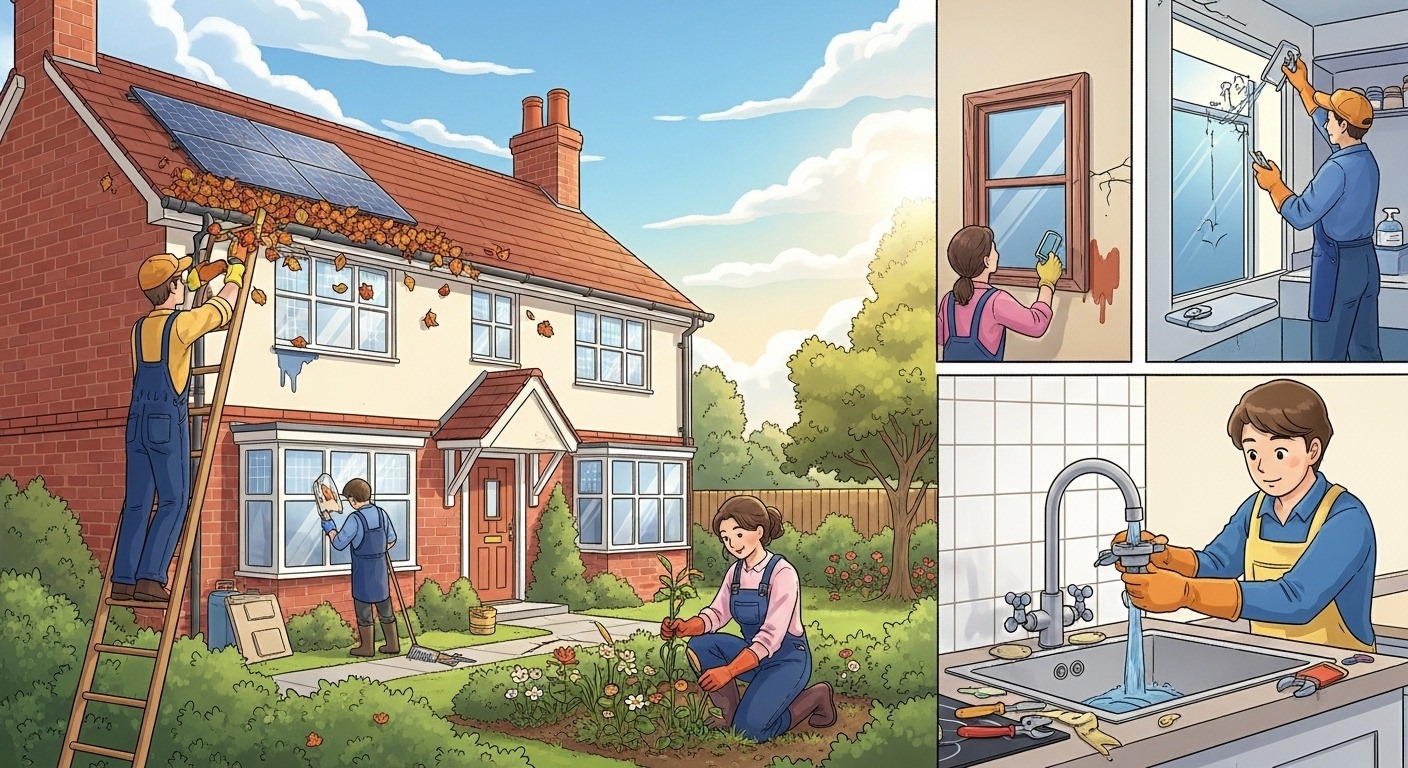
Routine maintenance, such as bleeding radiators or replacing a lightbulb, is considered part of your normal use of the property. These minor, inexpensive fixes are your daily responsibility and cannot be used as an excuse to withhold your deposit.
The law distinguishes between these small tasks and actual damage like a broken door or a stained carpet. Deducting for ongoing upkeep or structural maintenance crosses into illegitimacy, as these are the inherent costs of owning and renting out property.
Deposits must be settled within a reasonable timeframe
Holding a security deposit indefinitely is not permitted under the 2026 Good Landlordship Act. If you leave the home in perfect condition, your landlord is legally required to return your full deposit within 14 days.
If there is damage or unpaid rent, the landlord has up to 30 days to provide a specified overview of deductions and return the remaining balance. These strict windows are designed to prevent the uncertainty that many tenants feel after moving out.
Joint responsibility complicates returns
In shared housing, deposits are often handled collectively, which can make individual accountability much more difficult. When a group is responsible for a single deposit, a dispute with one person can affect the return of everyone's money.
Legal protections focus on fairness, but your practical resolution depends on having a clear agreement among your housemates at the start. Documenting who is responsible for which room can prevent internal conflicts when it comes time to move out. Tenants on short-term or fixed-term contracts often mistakenly believe they have fewer legal protections than permanent residents. Your deposit rights remain identical regardless of whether you lived in the home for six months or six years.
Disputes arise from interpretation instead of absence of law
Most deposit conflicts in 2026 are not caused by a lack of clear rules, but by subjective interpretations of what counts as "clean" or "damaged." The law provides the framework, but applying it to a specific scratch or stain requires human judgment.
This gray area is exactly why the initial check-in report and the final inspection are so vital for your protection. Having a shared, signed document limits the room for creative interpretation when it comes time to settle the final bill.
Written records strengthen protection
While your legal rights exist even without a single piece of paper, having a written record dramatically strengthens your position. Clear photos of the property taken on your first and last day serve as objective evidence that no verbal argument can beat.
A signed "opnamestaat" and a final inspection report are your best defenses against a landlord who might be looking for reasons to keep your money. Their presence reduces uncertainty and often prevents a dispute from ever starting in the first place.

Deposits are protected by principle as much as rule
Beyond specific legal clauses, the protection of your deposit is grounded in the fundamental principle of fairness. You are legally entitled to the full return of your money unless a landlord can provide clear and lawful evidence to justify a deduction.
This principle is what prevents arbitrary charges from being supported by the Rent Tribunal or the Dutch courts. It places the burden of proof on the landlord to show that a cost is both necessary and directly caused by your actions. Knowing the specific 2026 laws that protect your deposit does not guarantee an effortless return, but it fundamentally changes the tone of the conversation. The issue shifts from whether the landlord is being "nice" to whether their deductions meet strict legal standards.
Protection does not eliminate tension but limits harm
Current deposit laws cannot remove the natural stress of moving or the occasional disagreement with a property owner. What the 2026 framework does is create clear boundaries that limit how far those disagreements can actually impact your finances.
By mandating a maximum 14-day return for clean properties and requiring proof for all deductions, the law provides a layer of stability. These boundaries are essential at a moment when renters are often at their most financially vulnerable during a transition.