February 8, 2026
What steps should you take to report unsafe housing legally?
10/12/2025
February 21, 2026
February 21, 2026

Living in unsafe housing creates a particular kind of stress. It is not just discomfort or inconvenience, but the feeling that your basic sense of security is compromised in a place that is supposed to be home. In the Netherlands, many renters hesitate to report unsafe conditions because they fear retaliation, eviction, or being told the problem is not serious enough. What makes this situation difficult is that unsafe housing rarely appears dramatic. It often shows up gradually, through persistent damp, faulty wiring, broken heating, or structural neglect that quietly affects daily life.
Success reshapes behavior quietly
When discrimination claims succeed in 2026, their impact often extends far beyond the individual case by quietly reshaping industry standards. Success forces agencies to adopt more objective selection protocols, which narrows the room for future biased discretion.
Under the Good Landlordship Act, successful enforcement makes transparent communication the new legal minimum for all market participants. This ripple effect ensures that the housing market becomes more professional and predictable for everyone, not just those who file a claim.
Understanding success reduces self-doubt
Many renters internalize repeated rejections, assuming they reflect a personal failure or an inadequacy in their application profile. Seeing why these claims succeed reframes the experience as a structural inequality rather than an individual shortcoming.
This understanding allows you to move through the housing market with reduced self-doubt and a clearer focus on systemic patterns. It shifts the burden of proof back onto the decision-makers and away from your own sense of worth. Discrimination persists primarily because it is subtle, normalized, and rarely challenged in the rush of a tight housing market. Claims succeed when they interrupt this cycle by demanding that selection criteria be justified with objective facts.

Fear of retaliation shapes silence
One of the biggest barriers to reporting unsafe housing in 2026 is the persistent fear of retaliation. You may worry about unfair rent increases, lease non-renewal, or intimidation from your landlord in a competitive market. The Good Landlordship Act specifically protects you against these threats, making intimidation or harassment a punishable offense. Reporting shifts the risk away from you and into a regulated system designed to hold owners accountable. Legal reporting mechanisms, such as your local municipality’s "Meldpunt," are designed to create a safe distance during the assessment. This distance reduces the need for direct confrontation and allows a neutral evaluation of the property's condition.
This structure prevents you from having to negotiate vital safety issues on unequal footing with a powerful property owner. It ensures that the safety of your home is determined by objective standards rather than personal pressure.
Not all hazards look urgent, but they still qualify
Unsafe housing is not limited to immediate emergencies like a gas leak or a collapsed roof. Persistent damp, toxic mold, and inadequate ventilation are all serious hazards that qualify for formal reporting in 2026. These chronic conditions often have long-term effects on your health, making it essential to address them early. You do not need to wait for a total crisis before the Rent Tribunal or municipality will intervene.
For newcomers, language barriers can make reporting unsafe conditions feel like an impossible or even dangerous task. This hesitation can unfortunately increase your exposure to serious health and safety risks over the long term. The 2026 reporting systems are increasingly accessible, with many municipalities offering support in multiple languages or via the Juridisch Loket. Reporting is about the physical condition of the house, not your mastery of the local language.
Inspections focus on conditions instead of tenants
When unsafe housing is assessed, official inspections focus strictly on the building's structural integrity and its safety features. This distinction is vital because tenants often worry that an inspection will invite personal scrutiny of their lifestyle.
Assessors are there to evaluate the landlord's compliance with the law, not to judge how you organize your home. Their goal is to identify hazards like faulty wiring or lead pipes that are the owner's legal responsibility. You may have tolerated unsafe conditions for many months before deciding to file a formal report. Some tenants worry that this delay undermines their credibility or suggests the problem isn't actually serious.
Reporting does not automatically end a tenancy
A common fear is that reporting a hazard will lead to an immediate "retaliatory eviction" or a notice to vacate. Under the latest 2026 protections, landlords are strictly prohibited from terminating a lease simply because a tenant complained.
Reporting is intended to result in a repair, not your displacement from the property you are paying for. If a landlord attempts to evict you after a report, the court will likely view it as illegal retaliation. Formal legal reporting is rarely an instant process; it involves coordinated assessments, official inspections, and administrative follow-ups. This delay can be frustrating when the hazard is affecting your daily comfort or your health.
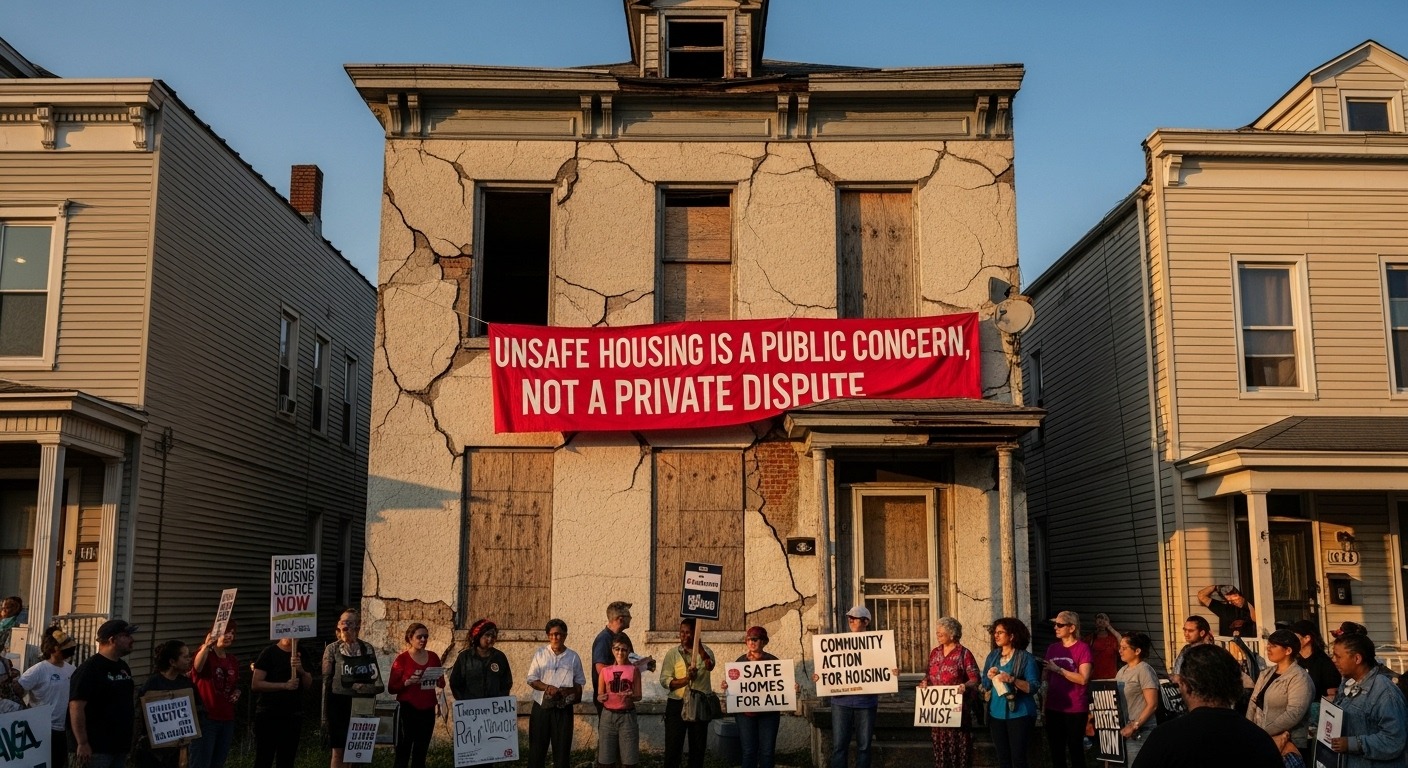
Unsafe housing is a public concern instead of a private dispute
At its core, unsafe housing in the Netherlands is far more than a simple disagreement between you and your landlord; it is a serious issue of public health. Substandard housing conditions can lead to disease outbreaks or structural accidents that affect the entire community.
This is why reporting exists within public systems like the municipal "Meldpunt," rather than relying solely on private, informal negotiations. When you report a hazard, you are helping the government maintain the safety standards that protect every resident in your city.
Knowing when reporting is appropriate
Reporting is legally appropriate when housing conditions affect your safety or basic health, such as persistent toxic mold or faulty electrical wiring. It is not intended for minor aesthetic preferences or modern upgrades that you might simply prefer.
The system is built to enforce the absolute minimum standards that allow humans to live without physical or mental risk. Recognizing this threshold helps you distinguish between a daily inconvenience and a legitimate legal concern that requires intervention. Many tenants in 2026 still endure unsafe conditions in silence, often believing they are the only ones facing such a difficult situation. In reality, thousands of reports are filed every year because these maintenance issues are a widespread systemic problem.
Legal reporting as a form of protection
Filing a formal report is not an act of aggression; it is a calculated move to bring your personal risk into a regulated management system. It ensures that your case is handled by professionals who understand the Good Landlordship Act better than any private individual.
In a high-pressure market where landlords often encourage silence, choosing to report is the most grounded way to protect your right to a safe home. It creates a paper trail that makes it nearly impossible for an owner to ignore the danger without facing a fine.