February 7, 2026
What hidden costs surprise new tenants?
30/3/2023
February 7, 2026
February 7, 2026

Renting a first home or moving to a new city is an exciting milestone. In the current tight housing market of 2026, most tenants logically focus on the basic rent and location. However, if you only look at that one number on the rental contract, you are often deceived. Indeed, there is a significant difference between the “rental price” and the actual “housing costs”. New tenants are often overwhelmed by a series of additional costs that are not always communicated transparently during a viewing.
In this article, we pinpoint the sore spot and reveal the hidden costs that can unbalance your monthly budget in 2026.
The invisible service costs
Service charges are the most notorious source of financial surprises. Although the Good Landlord Act in 2026 strictly monitors unfair costs, the permitted items often remain unclear to laypeople.
- Cleaning and maintaining common areas: Do you live in an apartment complex? Then you contribute to the window cleaner for the central hall, the electricity for the elevator and the maintenance of the shared garden. These costs can range from €25 to €150 per month.
- Caretaker or security: In more modern complexes, a caretaker is often present. Although this is luxurious, the bill is directly translated into your monthly service costs.
- Administration costs: Landlords may charge a small percentage (maximum 5%) of the service costs for administrative processing.
Municipal user taxes
Many tenants do not realize that, in addition to the rent, they also pay tax directly to the municipality and the water board. In 2026, these rates rose in many regions to finance climate adaptation.
- Waste tax: This is the tax for collecting and processing your household waste. Depending on the municipality and the size of your household, this amount can reach €350 to €450 per year.
- Treatment charge and water system charge: You pay these taxes to the water board for the treatment of your wastewater and the maintenance of the dikes. For a multi-person household, this can easily be an additional item of $15 to $25 per month.
- Weather charge: In some municipalities, the tenant is charged the sewer charge, although this is more often a burden for the owner. Check your contract carefully to see who is responsible for this.

The “Minor repairs” pitfall
In the Netherlands, the distribution of maintenance costs is legally laid down in the Minor Repairs Decree. Many new tenants think that the landlord fixes everything, but that is a misconception.
In 2026, the list of tasks for the tenant will be longer than you think. Whitewashing the walls, venting the radiator, replacing lamps, and even repairing a loose door handle are borne by the tenant. If you do not have these things in order when you leave, the landlord can withhold part of the deposit for repairs that you could have done yourself for a fraction of the price. Setting aside a budget of €20 to €50 per month for this type of maintenance is not an unnecessary luxury in 2026.
Insurances you shouldn't forget
A landlord has insured the home himself (home insurance), but your own belongings are not.
- Household insurance: Many rental contracts now require household insurance. Given the rising value of electronics and furniture in 2026, the premium for good coverage increased.
- Liability Insurance (AVP): Suppose your washing machine leaks and causes damage to the floors of the neighbors below. Without AVP, you pay for the costs, which can amount to thousands of euros. Together, these insurances cost an average of €15 to €30 per month, but are often forgotten in the initial budget planning.
The furnishing costs of renting “bare”
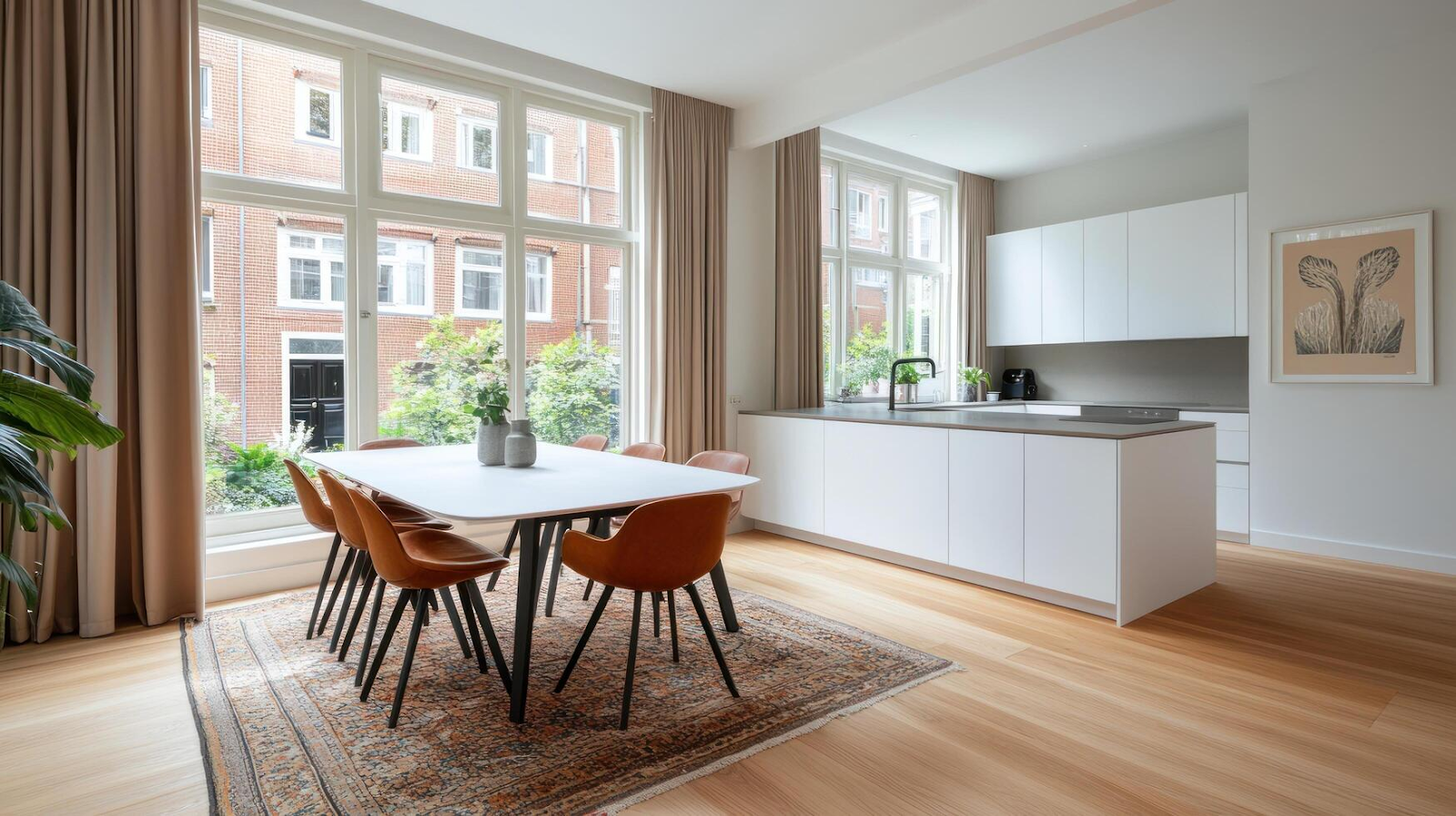
In the Netherlands, “bare rent” is the norm, which is different from “upholstered” or “furnished”. New tenants are often shocked when they discover that a home is being completed without a floor, curtain rails or even lights.
- The floor: Laying laminate or carpet in a 60 m² home, including the subfloor and skirting boards, will quickly cost between €1,500 and €2,500 by 2026.
- Window treatments: Curtains or blinds for an entire home are expensive. If the previous tenant does not offer it for takeover, you are facing an investment of hundreds of euros before you have any privacy.
- Moving costs: Even with the help of friends, moving costs money: rent a van, moving boxes, and the inevitable pizzas and drinks for the helpers.
Deposit and prepaid rent
Although these are not a “cost” in the sense that you have lost the money (provided you leave the house tidy), it is a huge drain on your liquidity at the start of the rental period.
In 2026, it is common for a landlord to request a two-month deposit plus the first month's rent in advance. With a rental price of €1,200, this means that you have to transfer €3,600 immediately before you get the key. For many starters, this amount is a threshold that they underestimate, especially because this money is fixed throughout the rental period and provides no return.
Strategic budgeting for your new home
The best way to avoid surprises is to make a realistic overview of the total monthly expenses. Add a standard amount of at least 25% to 30% for all the above items to the basic rent. During a viewing, always ask explicitly about the average amount of service costs for the previous year and check with the municipality for the current rates for waste and water board taxes.
By being proactive and including these “hidden” costs in your calculations, you can prevent the dream of having your own place from turning into a financial nightmare in 2026. Business knowledge is your strongest weapon against unexpected collections.