February 7, 2026
What flexibility do I lose by buying?
20/8/2024
February 20, 2026
February 20, 2026
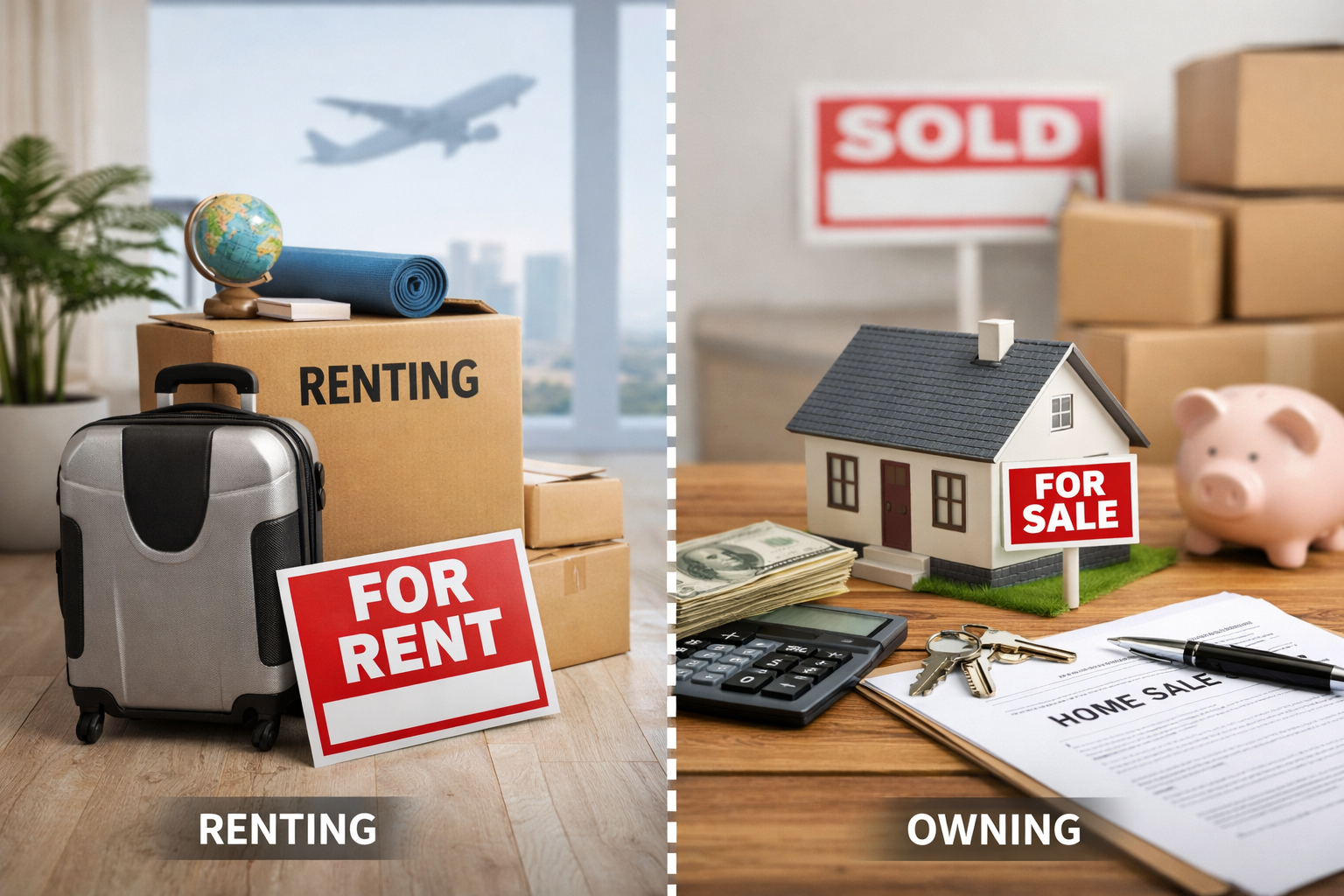
Buying a home is often described as gaining freedom: freedom from landlords, from rent increases, from uncertainty. What’s talked about less is the kind of flexibility you quietly give up in return. Not all of it matters to everyone, but understanding which freedoms change helps you decide whether the trade-off fits your life right now.
Flexibility isn’t just about moving. It’s about how quickly you can adapt when life shifts. Buying doesn’t remove that ability; it slows it down and adds friction. For some people, that’s exactly what they want. For others, it becomes a source of stress they didn’t anticipate.
Geographic freedom becomes more expensive to use
As a renter, moving is relatively simple. Since July 2024, indefinite contracts have become the legal standard in the Netherlands, allowing most tenants to leave with just one calendar month's notice. The costs are limited to a moving van and potentially a new deposit.
Buying changes this dynamic entirely. Selling a home involves significant time averaging 28 to 32 days to find a buyer in early 2026 plus notary fees and agent commissions. These transaction costs act as a "moving tax" that can consume 4% to 6% of your home's value. This doesn't trap you, but it makes spontaneity a very expensive project.
Career mobility carries more weight
Job changes feel different when you own. In 2026, opportunities that involve moving cities or adjusting commute patterns now carry heavy housing consequences. You don't just evaluate the new salary; you must consider the current market's willingness to buy your home and the interest rates for your next mortgage.
Some owners hesitate longer before accepting roles in different regions because they are "locked in" to a favorable interest rate or a specific tax exemption. In a world that rewards professional agility, housing can quietly become a factor that slows your career momentum.
Financial flexibility tightens around fixed commitments
Ownership introduces a rigid financial structure that does not pause for life changes. While a renter can often downsize or move to a cheaper area relatively quickly if their income drops, a homeowner's mortgage, insurance, and municipal taxes are fixed obligations.
In 2026, even with stable mortgage rates, the total cost of ownership includes mandatory maintenance and potential VvE (Homeowners Association) increases. You trade the "reactive" flexibility of cash flow for the "strategic" predictability of a 30-year plan.
Time flexibility gets absorbed by responsibility
Owning a home takes a significant amount of your most limited resource: time. Arranging repairs, managing long-term maintenance projects, and participating in VvE meetings all require consistent attention. Renters outsource nearly all of this to a landlord without even noticing.
Over time, this adds a steady layer of responsibility that reduces how freely you can allocate your energy elsewhere. For those in high-intensity career phases or with young families, this "hidden time cost" of stability can become a significant source of stress.

Short-term lifestyle changes become harder to test
Renting allows for low-stakes experimentation with your lifestyle and environment. You can live in a different neighborhood, try a smaller or larger space, or adjust to new routines without facing any long-term financial consequences.
Buying turns these experiments into significant legal and financial commitments. While you can still change your situation, reversing a purchase takes much more effort and cost, as ownership rewards certainty rather than the spirit of exploration.
Renting out is not a simple escape hatch
Many buyers assume they can keep their flexibility by renting out the property later if their plans change. In practice, Dutch mortgage conditions, tax rules, and the strict Fixed Lease Contracts Act of 2024 often limit this option severely.
Renting out your primary residence may not be allowed by your bank, could be unprofitable due to high management costs, or might be emotionally difficult to manage. This makes ownership far less flexible than it appears on paper, as your exit options are significantly narrower.
Flexibility shifts from reactive to strategic
Buying does not eliminate your flexibility; it simply changes its form from something reactive to something strategic. Instead of being able to react quickly to change, owners must use foresight and long-term planning to navigate their transitions.
For some, this shift feels deeply grounding and helpful, while for others, it can feel restrictive. Neither approach is inherently better, but understanding the difference is vital for choosing the path that matches your personality.
When this loss of flexibility is a benefit
For many people, reducing their own flexibility is actually the goal of buying a home. It creates a healthy sense of commitment and routine, replacing the exhaustion of constant decision-making with a reliable sense of long-term stability.
If you are currently seeking rootedness and a permanent base, this trade-off feels positive rather than limiting. In the right stage of life, the constraints of ownership can be incredibly comforting and provide a foundation for other areas of growth.

When the loss feels heavier than expected
Flexibility loss feels hardest when your life is still in a phase of significant change. Career shifts, family growth, or evolving personal priorities can easily clash with the 30-year commitment of a mortgage. In these transitional phases, renting acts as a "shock absorber," allowing you to change course without the friction of a property sale.
Buying too early can turn normal life transitions like a new job in a different city into major financial stressors. In early 2026, Dutch mortgage rates for a 10-year fixed term have stabilized between 3.7% and 4.2%, meaning the cost of "getting it wrong" is higher than it was during the era of ultra-low rates. Timing doesn't just affect your wallet; it determines your daily experience of freedom.
The question to ask before buying
The key question is not "Will I lose flexibility?" but rather "Which specific flexibility do I still need right now?" If the freedom to move, adapt your budget, and change direction at short notice is vital for your current career or relationship stage, the Dutch rental market which now features strengthened tenant protections and limited annual increases may better support you.
If, however, your primary need is for a stable home base where you can build equity and escape the uncertainty of landlord decisions, buying aligns perfectly with that shift. Awareness of your own needs prevents the regret of choosing a "stable" path before you were ready to stand still.
Exchange over loss
Buying a home does not simply take flexibility away; it trades one kind for another. You lose the ease of movement and quick reversibility that renting provides. In return, you gain control over your living environment, protection against rising rents, and the long-term grounding of ownership.
The right moment to buy is when the flexibility you are giving up no longer feels essential, and the stability you are gaining feels like a supportive foundation rather than a constraint. When this balance is clear, ownership becomes a deliberate choice that fits your life in 2026 and beyond.