February 7, 2026
How spacious are the houses in Zoetermeer?
28/2/2023
February 7, 2026
February 7, 2026

In 2026, Zoetermeer will be known as a city that offers space where other cities in the Randstad have to sacrifice. As a former growth center, the city was designed with a clear vision: wide streets, lots of greenery and, above all, homes that are suitable for families. While people often have to settle for compact upstairs apartments in Amsterdam or The Hague, the “Zoetermeer Standard” is still synonymous with decent living space and a private garden.
In this article, we explore the spaciousness of the Zoetermeer housing market in 2026, the differences between the neighborhoods and the new trends that make the city more compact but not less livable.
The new town legacy: Built for space
Zoetermeer is a so-called New Town. This means that the city has been designed since the 1960s to absorb the overflow from The Hague. Today, this urban DNA is still the reason why, on average, the homes here are more spacious than in the historic cities around us.
- Single-family homes as a basis: roughly 58% of the housing stock consists of single-family homes. This is a high rate for a city with a population of more than 125,000.
- Living area: In 2026, the average transaction price per square meter will be around €4,392. Although prices are rising, in Zoetermeer you get an average purchase price of €464,000 often a house of 110 to 130 m², something that is almost impossible in nearby major cities.
The widest neighborhoods: Rokkeveen and Oosterheem
Those looking for maximum square meters will often end up in the southern and eastern expansion districts in 2026. Here, the average home value is higher, which is directly reflected in the spatial design and size of the lots.
- Rokkeveen: This neighborhood, built in the 80s and 90s, is known for its solid architecture and spacious layout. Many homes here have a living area that is well over 120 m², often with deep gardens and private driveways.
- Oosterheem: As the largest vinex district in the city, oosterheem will offer enormous diversity in 2026. The district is divided into various subplans, including very spacious detached houses and semi-detached houses, especially in the edges of the neighborhood (near the Bentwoud). The proportion of single-family homes is even 80% in some neighborhoods of Oosterheem.
Densification and the “Compact city” trend
Although Zoetermeer is spacious, the course will change in 2026. The municipality has the ambition to add between 10,000 and 16,000 new homes by 2040, but explicitly chooses not to expand into the surrounding greenery.
- Vertical space: New construction projects such as Markt 10 in the City center and Edison park focus on heights. This creates modern apartments that, although smaller (an average of 70-90 m²), still feel spacious thanks to smart layouts and high ceilings.
- Top and split: In 2026, Zoetermeer will be a leader in “making better use of” existing buildings. By adding extra floors to existing flats (tops), the city is creating new living space without using extra land.
The charm of the older neighborhoods: Buytenwegh and lake view
The neighborhoods from the 1970s, such as buytenwegh and meerzicht, offer a different form of space. Here, the houses are often very practical, with straight walls and large windows, which makes them feel larger than the official square footage suggests.
Tenants will find a relatively large amount of space here at a stable price in 2026. The average rental price per m² in Zoetermeer in the mid-range is more than 25% below the national average, which means that you simply have more room left over for the same budget than in the surrounding Randstad municipalities.
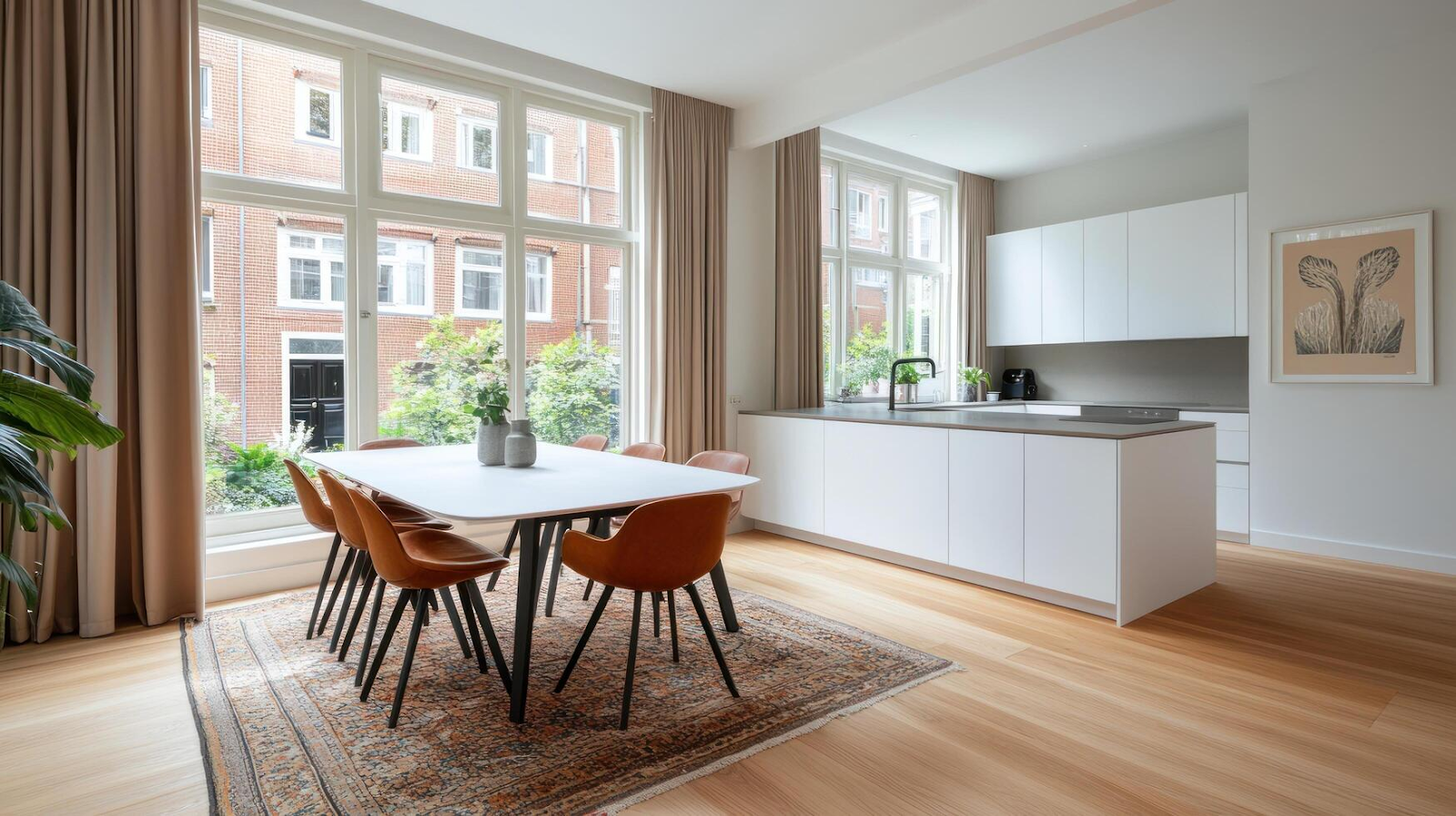
Creating space through construction
A remarkable trend in 2026 is that residents of Zoetermeer no longer sell their homes for a larger house, but opt for an extension. Because many plots in the city are spacious, the housing stock is ideal for rear extensions.
Prefab extensions are being installed at a rapid pace in neighborhoods such as seghwaert and de leyens. Within eight weeks, residents often create 15 to 20 m² of extra living space on the ground floor, which significantly increases home value and home comfort.
How spacious is Zoetermeer for you?
The question of how spacious a home in Zoetermeer is depends a lot on your search profile. In 2026, the city offers one of the best ratios between living space and price in the The Hague-Rotterdam region. The neighborhoods are designed in such a way that you not only have space inside the walls, but also outside, thanks to the “green collar” and the many parks such as Westerpark and Buytenpark.
Although the city is becoming more compact due to the focus on high-rise buildings in the center, the core of Zoetermeer remains unchanged: a city where you can still find a home where you don't fly directly into the walls.