February 7, 2026
How does inflation affect each option?
25/9/2024
February 20, 2026
February 20, 2026

Inflation is one of those forces that feels abstract until it shows up in your housing costs. Prices rise, headlines follow, and suddenly the rent-versus-buy question feels different than it did a year ago. In the Netherlands, inflation affects renters and buyers in very different ways, not immediately, but gradually and unevenly.
Understanding how inflation interacts with each option helps explain why one choice can feel safer during certain periods, while the other feels more exposed. It’s not about which option wins in theory, but how inflation actually shows up in day-to-day life.
Rapid rent inflation
For renters, inflation is felt directly and almost immediately as maintenance and management costs are passed on through higher monthly bills. In 2026, maximum rent increases in the Netherlands are set between 4.4% and 6.1%, driven by high wage growth and previous inflation cycles.
Unlike a mortgage where the primary cost is fixed, rent responds to the current economy, making long term financial planning difficult. Renters experience inflation in real time without the stability of locked in housing expenses.
Delayed homeowner costs
Homeowners in the Netherlands often feel insulated during the initial stages of inflation if they hold a fixed rate mortgage, as their primary payment remains unchanged. However, this protection is only partial, as municipal taxes, energy bills, and maintenance costs still rise with inflation.
For owners, inflation arrives in layers rather than all at once, impacting the cost of ownership gradually. While the mortgage payment feels stable, the total cost of running the home still increases alongside general price levels.
Debt erosion advantages
One of the advantages of buying during an inflationary period is the gradual erosion of debt. As inflation pushes up wages, the real value of a fixed mortgage payment decreases relative to the homeowner's income.
Over time, the mortgage payment feels lighter because it represents a smaller percentage of monthly take home pay. Rent does not benefit from this effect, meaning inflation generally favors those with fixed financial commitments and debt.
Asset appreciation differences
Real estate is traditionally seen as a hedge against inflation, with Dutch property values expected to grow by 3% to 5.5% in 2026. Owners benefit from this preservation of value and potential capital gains, whereas renters do not participate in asset appreciation.
Energy costs also affect both groups, but owners can lower their bills by investing in improvements like solar panels or insulation. Renters are often stuck with a building's current efficiency and must absorb higher utility expenses.
Real estate inflation hedge
Housing in the Netherlands has historically acted as a reliable hedge against inflation, with prices rising approximately 50% in real terms over the past decade up to early 2026. While owners benefit from this value preservation and potential capital gains, renters do not participate in asset appreciation.
For renters, housing costs climb to match the market without building any personal wealth. While owning doesn't guarantee a profit, it fundamentally changes your exposure to the eroding effects of inflation on cash.
Short term buyer risk
Inflation often forces the European Central Bank to adjust interest rates, which introduces significant timing risks for buyers planning to sell or refinance within a few years. As of early 2026, policy rates have held steady at 2%, but previous shifts have created volatility.
Renters face the bite of inflation through annual rent hikes, currently capped between 4.4% and 6.1%, but they avoid long term financial exposure to volatile interest rates. For those with short horizons, the risk of a market correction driven by rate spikes is a major consideration.
Savings power erosion
Inflation is the quiet enemy of cash, meaning savings lose real purchasing power if they aren't earning interest that beats the current inflation rate of around 2.4%. Renters holding large cash reserves for a future deposit are particularly vulnerable to this erosion.
Buyers convert that liquid cash into a "hard" asset which may protect the value of the money better than a standard savings account. In an inflationary environment, the choice is between the safety of an asset and the flexibility of liquid cash.
Predictability financial value
When prices for goods and energy are shifting, the value of financial predictability spikes dramatically. A fixed rate mortgage acts as a financial anchor that provides a level of psychological calm often worth more than the mathematical "optimal" choice.
Renters, conversely, face the uncertainty of annual rent indexation, where the trend is almost always upward. This difference in stability is why many people move toward ownership during inflationary periods; they are buying a known financial future.
Inflation exposure exposure
Inflation doesn't necessarily create new problems, but it exposes the ones that already exist in a household budget. Renters with thin monthly margins feel the weight of extra rent immediately, while buyers who stretched their budgets feel rising maintenance and insurance costs.
Having a financial buffer is more important than ever in 2026 to navigate these shifts. Whether you rent or buy, inflation tests your preparation and financial resilience.
Renting still offers protection from long-term risk
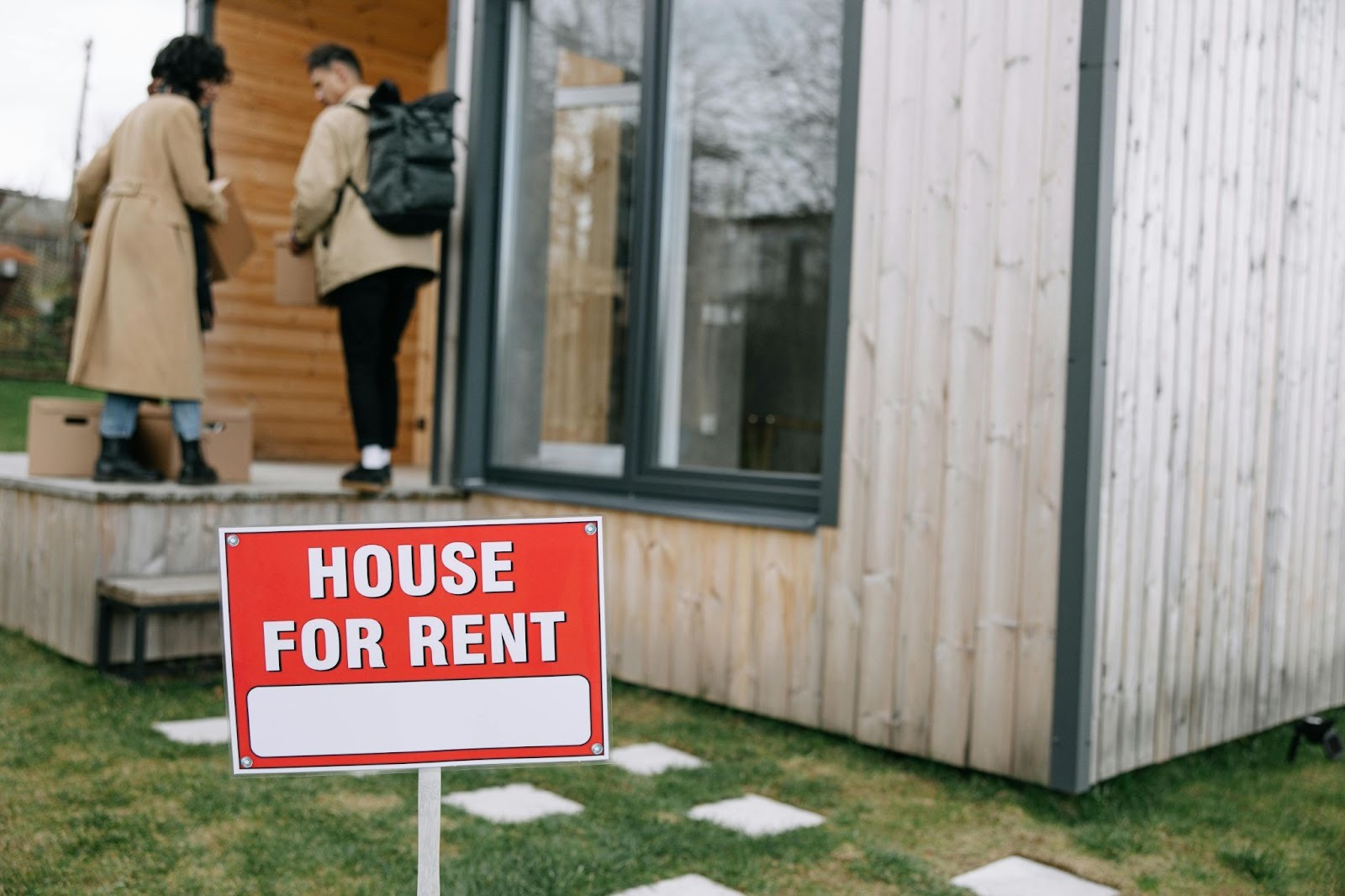
Despite rising rents, renting provides a distinct layer of protection by limiting your exposure to long-term financial debt. Renters are not locked into a thirty-year commitment during volatile economic periods, allowing them to adjust their living situation more easily if their career or personal life takes a turn.
While inflation structurally favors ownership, the flexibility of renting has its own tangible worth. Risk comes in different forms; for some, the risk of being unable to sell a home during a downturn is far more daunting than the risk of an annual rent increase.
Buying benefits most when inflation is steady, not chaotic
Buying works best when inflation is moderate and predictable, as it is in early 2026 with a national CPI of 2.4%. When inflation is steady, you can plan for maintenance and tax increases with confidence.
Extreme or volatile inflation, however, increases uncertainty around interest rates and the future value of your home. In those chaotic periods, the psychological benefit of ownership might be offset by the stress of rising secondary costs. Context and stability matter much more than abstract financial theory.
The real trade-off inflation creates
Inflation fundamentally shifts what you pay attention to in your daily life. Renters often find themselves focused on rising monthly costs and the next potential increase. Buyers, meanwhile, shift their focus toward long-term asset protection and the responsibilities of property upkeep.
Neither option allows you to escape inflation entirely; they simply change how you experience its effects. Understanding this trade-off prevents you from entering the market with false expectations of total immunity from rising prices.
Predictability over immunity
Inflation affects renting and buying in fundamentally different ways. Renters feel the impact quickly and directly through rising monthly costs, which are currently capped at 4.4% for the private sector in 2026. Buyers feel it more slowly and indirectly, with fixed-rate mortgages offering a partial shield.
Neither option is completely immune to the economy. The better choice for you depends on whether you value flexibility or predictability more during this specific phase of your life. Inflation does not make the decision for you; it simply changes which trade-offs matter most.