February 8, 2026
Cons: short-term visas and rental contracts
20/11/2025
February 21, 2026
February 21, 2026

Short-term visas and rental contracts often appear to align neatly on paper. Both are temporary, both come with clear end dates, and both seem to offer flexibility. For many newcomers to the Netherlands, this pairing feels logical at first. Over time, however, the disadvantages become more visible. The combination creates layers of uncertainty that reinforce each other, shaping not just housing outcomes but how stable daily life feels.
Temporary status amplifies landlord hesitation
Short-term visas signal uncertainty about how long someone will remain in the country. When combined with a short rental contract, this uncertainty doubles. Landlords worry not only about contract renewal but also about the tenant’s legal right to remain. Even when income is sufficient and behavior is reliable, the temporary nature of both arrangements increases perceived risk. This hesitation often shows up as stricter requirements or fewer offers.
Both short-term visas and rental contracts require renewal, often on different timelines. Coordinating these renewals creates ongoing pressure. A visa extension may be pending while a rental contract renewal is being discussed, or vice versa. Each renewal depends on the other indirectly, creating a cycle of uncertainty. Instead of feeling settled, life becomes a series of deadlines that never fully resolve.
Planning horizons remain short
When both residency and housing are temporary, long-term planning becomes difficult. Decisions about furniture, schools, or even social commitments are made cautiously. People hesitate to invest in their living space or community when both legal status and housing feel provisional. This short planning horizon limits emotional and practical settlement, even when the intention to stay exists.
Many administrative systems in the Netherlands assume stable residence. Short-term visas and rental contracts conflict with this assumption. Address registration, healthcare access, and banking arrangements all rely on continuity. When continuity is missing, these systems become harder to navigate. The effort required to maintain access increases, adding friction to daily life.

Negotiation power remains limited
As a tenant on a short-term visa in 2026, you may feel you have less leverage when negotiating your rental terms. Landlords are often aware that your options are restricted by time, which can lead to accepting less favorable conditions just to secure a roof over your head.
In the current ultra-competitive market where properties in cities like Amsterdam often receive dozens of applications within 48 hours this imbalance is intensified. Your temporary status can inadvertently signal a willingness to bypass certain maintenance requests or accept higher rent to avoid the risk of being homeless during a short assignment.
Short-term living requires a frequent and repetitive cycle of address registration and deregistration with the local municipality (BRP). For those on short-term visas, the administrative burden of obtaining a BSN, registering within five days of arrival, and then deregistering upon departure feels disproportionately heavy.
Emotional security remains fragile
Even when your daily life in the Netherlands functions smoothly, the background awareness of your temporary visa status can prevent a house from ever truly feeling like a home. Plans remain tentative, and the emotional connection to your neighborhood often stays surface-level.
This fragility is a quiet but persistent source of stress, where stability is experienced as a conditional privilege rather than a guaranteed right. In 2026, the scarcity of housing only heightens this feeling, as the prospect of finding a new place if your current lease isn't renewed feels increasingly daunting. For those on employment-based visas, such as the Highly Skilled Migrant scheme, your housing security is directly tied to your professional status. In 2026, a job change or contract adjustment can have immediate implications for your residency, which in turn affects your eligibility to remain in your home.
Families feel the impact more strongly
The combination of short-term visas and rental contracts is particularly challenging for families with children. Continuity in schooling, childcare, and local social circles is essential for a child's well-being, yet temporary housing arrangements make this continuity impossible to guarantee.
The 2026 Dutch housing standards typically require 18 square meters per person to avoid overcrowding in family reunification cases. Finding a property that meets these legal requirements while also fitting within a temporary budget adds an extra layer of structural stress to the parenting experience. Short-term arrangements often come with hidden financial drains that only become visible over time. Frequent moves mean repeated moving expenses, the higher monthly rates of furnished "serviced" apartments, and the logistical cost of constantly updating insurance and utilities.
Advice often underestimates compounding effects
Newcomers often receive advice that treats visa issues and housing problems as separate topics. In reality, their effects compound; a delay in your IND residence permit can delay your BSN registration, which then prevents you from signing a formal rental contract or opening a bank account.
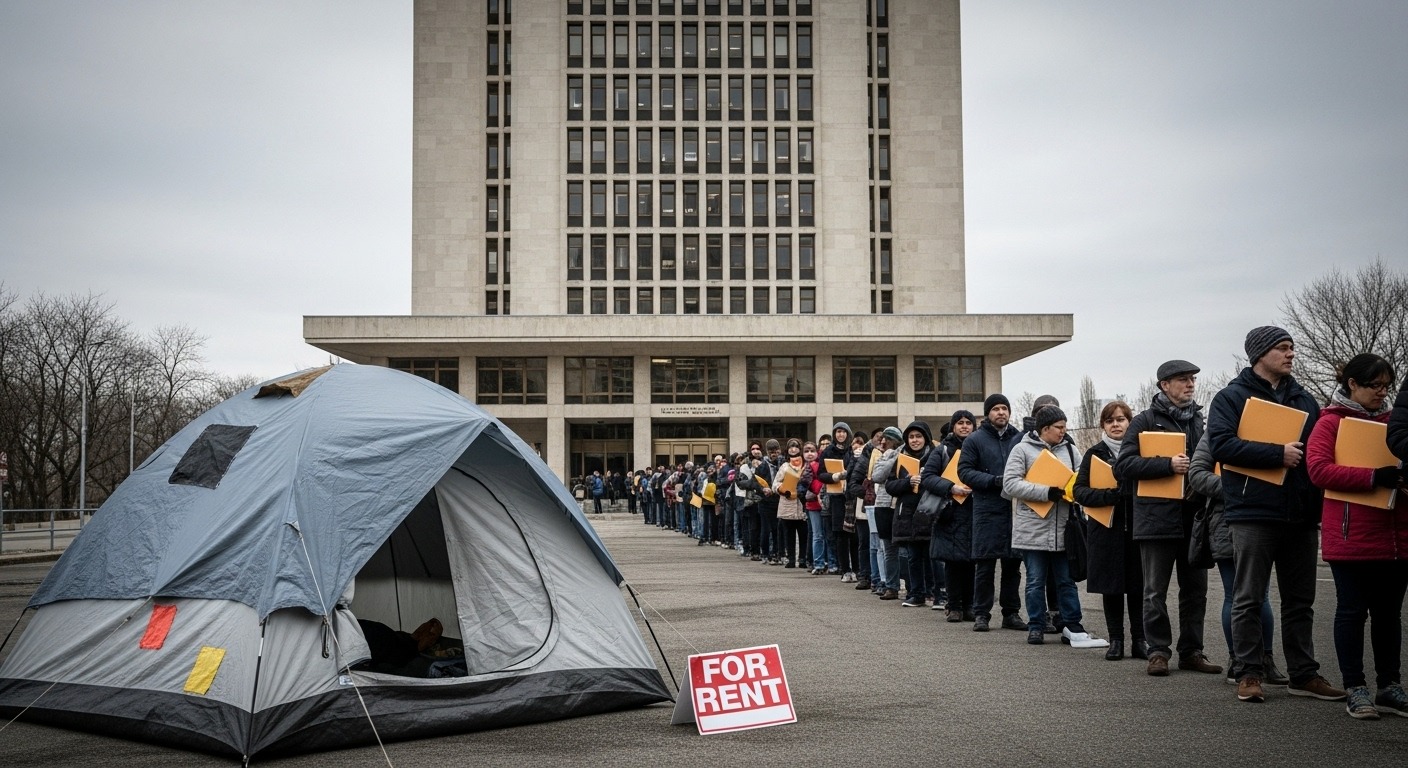
When relocation advice ignores this interaction, it can lead to a sense of shock when the combined impact of these systems feels much heavier than expected. In 2026, a "smooth" transition requires aligning these two bureaucratic paths perfectly to avoid becoming stuck in a loop of pending paperwork. Many people enter short-term arrangements as a transitional solution while they look for more permanent roots. However, in the 2026 housing market, many find themselves renewing temporary visas and short-term "diplomatic clause" contracts repeatedly because no long-term options are available.
Structural design favors permanence
The housing and administrative systems are designed around permanent residence and long-term contracts. Short-term visas and rental contracts sit uneasily within this design. The friction newcomers experience reflects this mismatch rather than individual failure. Understanding this helps explain why the process feels harder than expected.
Flexibility comes with hidden costs
While short-term visas and rental contracts offer flexibility, they also carry hidden costs in planning, emotional security, and administrative effort. These costs are not always visible at the start, but they shape daily life over time. Recognizing this trade-off allows people to make more informed choices about how long temporary arrangements should last.
Short-term visas and rental contracts are not inherently negative. They serve a purpose during transitions. The issue arises when their limitations are underestimated or prolonged. Understanding the disadvantages helps newcomers recognize when flexibility supports their situation and when it quietly undermines stability. In a system built around permanence, clarity about these trade-offs makes temporary living easier to navigate, even when it remains imperfect.