February 5, 2026
Why do homes on the ground floor often have defects?
23/6/2022
February 6, 2026
February 6, 2026

In the search for a home in 2026, the downstairs apartment, often an attractive “first floor” in a pre-war neighborhood or a modern apartment with a garden, is a dream for many. No stairs, direct access to the outside and often a characteristic appearance. However, architecturally, ground-floor homes are in the “danger zone” of a building.
Where the upstairs neighbors are protected by the houses below, the downstairs apartment acts as the buffer between the foundation and the rest of the building. As a result, the ground floor faces specific technical challenges that simply do not occur on higher floors. In this article, we analyse the five biggest pain points and why they arise here.
The fight against rising humidity
Moisture is the number one enemy of a healthy home, and nowhere is this problem more persistent than on the ground floor. Rising moisture occurs when the masonry of the foundation and walls is in direct contact with groundwater without a properly functioning water-retaining layer.
- Capillary action: Bricks act like a sponge. They suck up the groundwater, which can lead to salt efflorescence, loose stucco and a musty smell in the home.
- Humidity: In 2026, now that homes are being insulated better and better, we often see that this moisture has nowhere to go. If the ventilation is not in order, the moisture settles at the coldest points: the underside of the walls.
Problems in the crawl space and foundation
What you don't see is often what costs the most. A downstairs apartment is the only layer that lies directly above the crawl space.
Wooden floor beams and fungus
In many Dutch homes built before 1970, the wooden floor beams lie close to the uncovered sandy ground. If the crawl space is not properly ventilated, it creates a hotbed for wood rot and basement fungus. In 2026, many of these homes reached the “expiration date” of the original beams, resulting in resilient floors or mold growth under the laminate.
Foundation issues
The ground floor supports the weight of the entire building. In case of subsidence (a major theme in 2026 due to drier summers), the downstairs apartment is the first to show cracks. Crooked floors or jammed doors are often the first symptoms of foundation repair that can cost tens of thousands of euros.
The vulnerability of the sewerage system
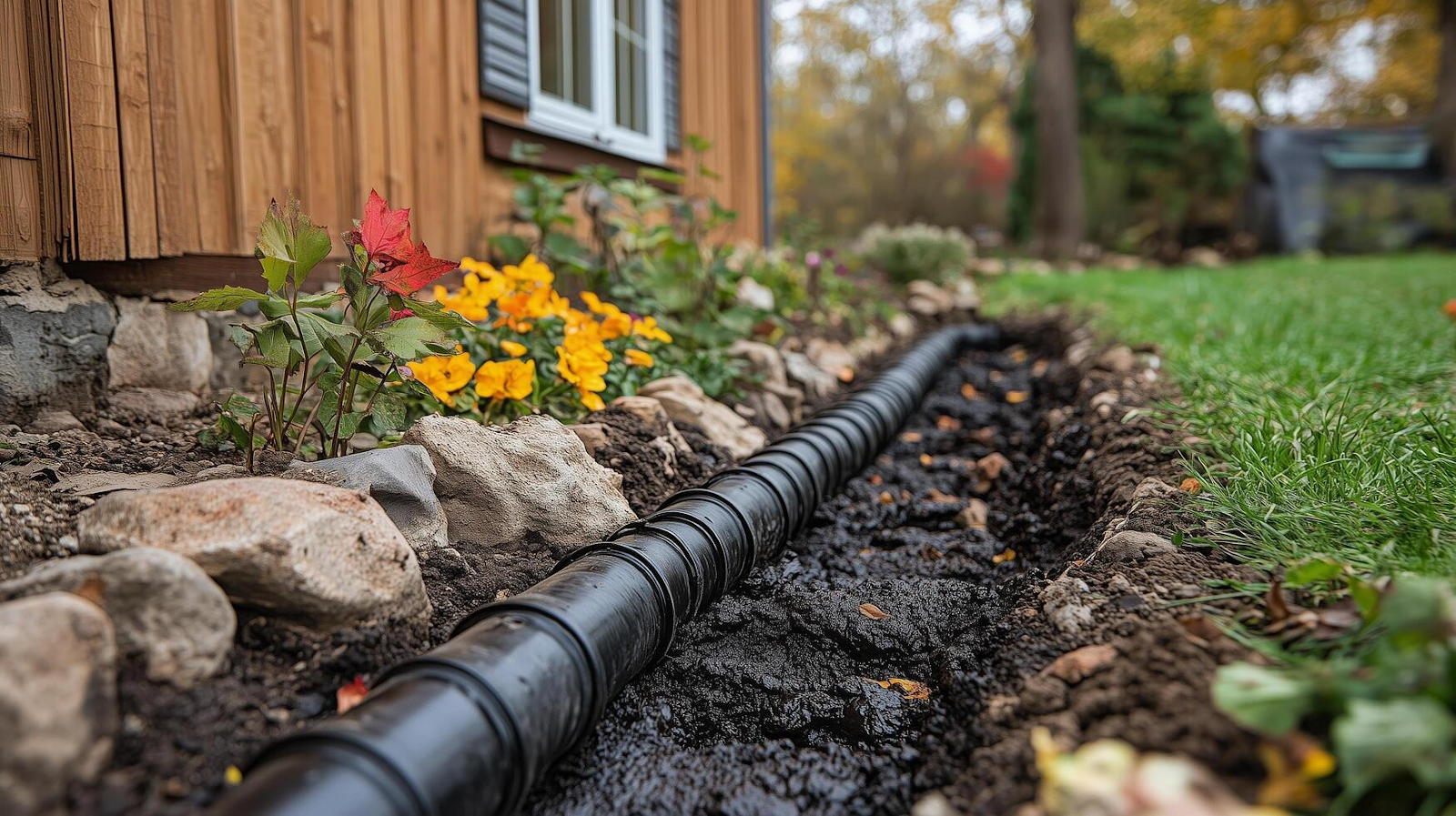
Downstairs apartments are located at the lowest point of a building's drainage. This makes them the “receptacle” for problems that arise higher up.
- Blockages: If a resident on the fourth floor flushes things down the toilet that do not belong there, the blockage often occurs in the collection trunk in the crawl space of the downstairs apartment.
- Overflow risk: In the event of extreme rainfall, a phenomenon that will become increasingly common in 2026, the city sewers will not be able to cope with the pressure. The water seeks the path of least resistance, which is often the lowest level of shower or toilet. Without check valves, a downstairs apartment can literally be flooded due to the mistakes of others.
Thermal discomfort: The “Cold feet” factor
Although heat rises (which is beneficial for the upstairs neighbors), the cold draws down. A downstairs apartment loses a lot of heat via the ground.
In 2026, with high energy prices, an uninsulated floor is a huge financial burden. Without high-quality floor insulation (such as insulation chips, polyurethane syringes or a Tonzon system), the floor temperature in winter often stays around 12-15 degrees, while the thermostat is at 20 degrees. This not only causes discomfort, but also condensation on the floor, which in turn promotes the formation of mold under furniture.
Safety and privacy (Social defects)
In addition to the architectural condition, there are also functional defects that are specific to the ground floor.
- Burglary sensitivity: The threshold for burglars is literally lower. Ground floor windows and doors require heavier hinges and locks (at least SKG*** in 2026) than three-storey houses.
- Noise pollution: Downstairs residents hear not only their immediate neighbours, but often anyone entering the central hall, walking up the stairs or walking across the sidewalk. Contact noise from the upstairs neighbours is the number one complaint among parterre homes.
So why are these houses so popular?
Despite this list of potential flaws, downstairs homes will remain extremely popular in 2026. The reason is simple: space and outdoor living. In a densely populated country, having your own garden is an enormous luxury. In addition, many of the above problems can now be solved easily with modern techniques:
- Floor renovation: Replacing wooden beams with a foam concrete floor solves problems with moisture, insulation and fungus in one go.
- Injecting walls: Chemical barriers can permanently stop rising moisture.
- Climate adaptation: Installing your own pump station or check valve protects the home against sewer flooding.
The depth: Research is crucial
Buying a downstairs apartment requires more critical research than a mezzanine. Where a house on the second floor is often all you need to do is take a look at the window frames, you have to go literally and figuratively into the ground floor.
An architectural inspection including an inspection of the crawl space is not a luxury for this type of home, but a bitter necessity. This is the only way to know if the charm of the first floor isn't linked to a swamp of hidden costs.
Do you have your eye on a ground floor apartment in an older city and are you unsure about the condition of the floor or foundation? I can find out for you if there have been previous reports of subsidence or foundation repair in that specific street, so you won't be surprised.