February 8, 2026
What do green mortgages offer?
18/10/2023
February 8, 2026
February 8, 2026

In the financial world of 2026, the “green mortgage” is no longer a niche product for idealists, but the gold standard for every home owner. The Dutch government and banks have joined forces to achieve the climate goals, so that sustainability is directly linked to the affordability of housing. A green mortgage is essentially regular financing with specific favourable conditions for homes that meet strict energy requirements or for owners who want to make their homes more sustainable. In 2026, now that energy prices are structurally higher than a decade ago, a home's energy label became the most important factor for both market value and interest burden.
Lenders see energy-efficient homes as a lower risk. After all, a borrower with a zero euro energy bill has more financial space to bear the mortgage costs. In this article, we analyse exactly what green mortgages offer in 2026 and how they differ from traditional financing.
The interest accumulation: Discount based on the energy label
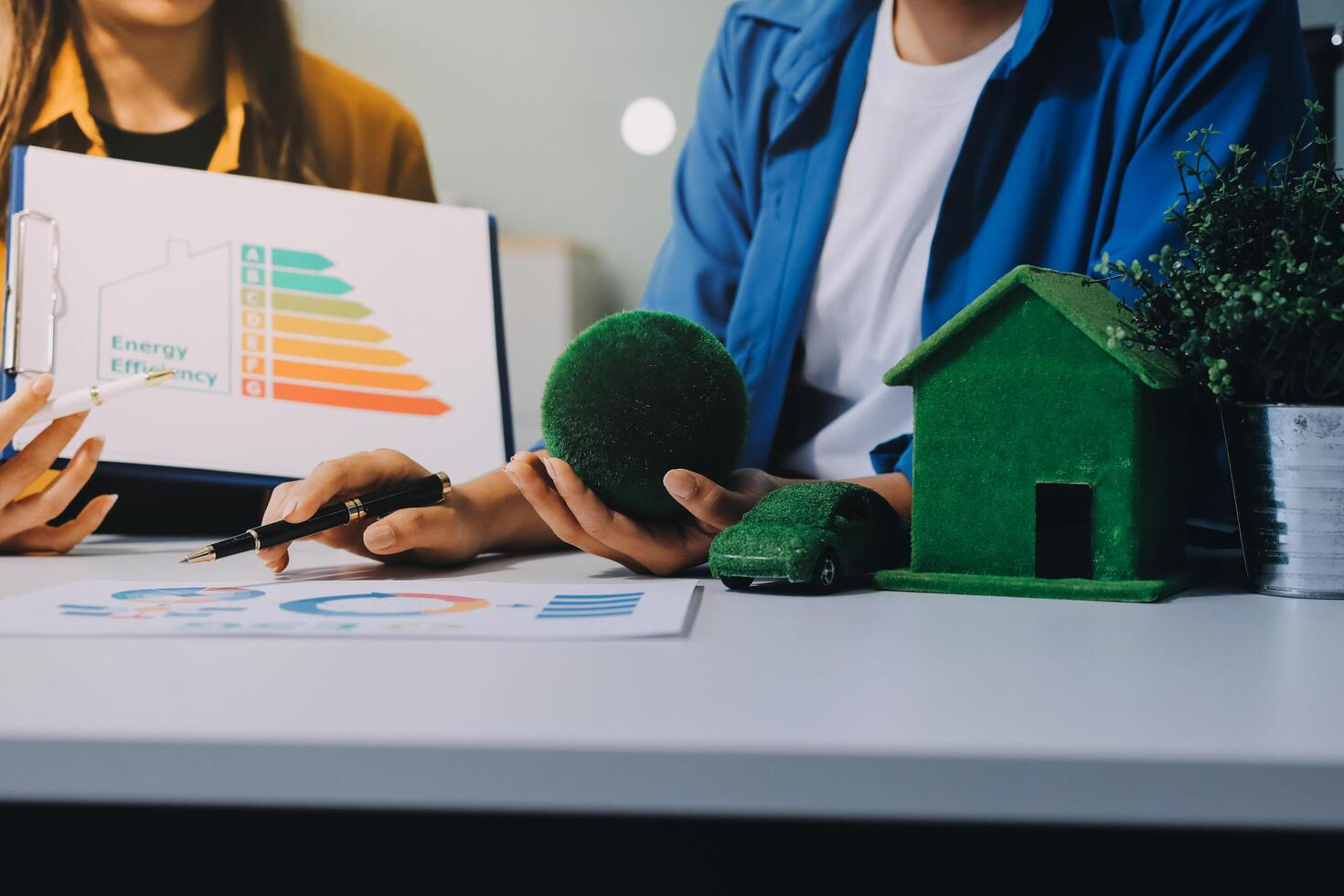
The most immediate benefit of a green mortgage in 2026 is the interest rate discount. Banks use a scale where interest rates fall as the energy label rises. Where previously only a label A received a discount, in 2026 we will see that the real benefits only start with labels A+ through A++++.
The offer in 2026 is often as follows:
- Sustainability discount: For homes with a superior energy label (A+++ or higher), banks offer a discount of up to 0.2% to 0.3% on the base interest rate. Over a period of 30 years, this saves consumers tens of thousands of euros.
- Automatic adjustment: A unique feature of green mortgages in 2026 is that the discount can often be activated over the term. If you buy a home with label C and renovate it to label A within two years, the interest discount will be applied immediately as soon as the new label is registered.
Extra borrowing capacity for sustainability
In 2026, Nibud's borrowing standards will be strictly linked to the energy performance of the home. A green mortgage offers the possibility to borrow more than would be allowed on the basis of income and market value alone, provided that this additional amount is invested in energy saving facilities (EBV).
Previously, this was a fixed amount of €9,000, but in 2026, this amount will be variable and depends on the energy label of the home when purchased. If you buy a home with a poor energy label (E, F or G), a green mortgage gives you the space to borrow up to an additional €20,000 to €30,000 for insulation, heat pumps or solar panels. The bank's logic is simple: the higher loan is offset by the decrease in monthly charges for gas and electricity, so that the household's total disposable income remains the same or even increases.
The Energy saving budget (ESB)
In 2026, a green mortgage often offers the option of an energy savings budget. This is a flexible construction depot that is specifically reserved for sustainability measures. The big advantage of this budget within a green mortgage is that you do not have to specify exactly what measures you are going to take when applying.
This offers buyers much-needed breathing space in 2026. You can buy the house, live there for a few months to see where the draft comes from, and then finance a hybrid heat pump or HR+++ glass from the EBB. As long as the money is spent on recognized sustainability measures, the interest rate on this part of the loan remains the same as the low “green” rates. In addition, the interest on this budget will be fully tax deductible in 2026, provided that it is used for your own home.
Favourable conditions for zero-on-the-meter homes
For the absolute top of the market, homes that are “zero on the meter” (NOM) or even energy positive, green mortgages in 2026 offer conditions that were previously unthinkable. For these homes, the energy performance guarantee is included in the financing.
Because the home generates energy itself, a large part of the bank's risk allowance expires. In some cases, green mortgages for NOM homes even offer an interest rate that is below the bank's purchase price, because they allow the banks to meet their own ESG (Environmental, Social, and Governance) obligations. For consumers, in 2026, this means that moving to an ultra-modern, sustainable home is often financially more attractive than continuing to rent or buy an outdated home with a lower purchase price but sky-high energy costs.
Integration with government subsidies and the ISDE
A green mortgage in 2026 won't work in a vacuum. Lenders have set up their systems in such a way that the mortgage seamlessly connects to the Renewable Energy Investment Subsidy (ISDE) and other government contracts.
When you make an investment via ji green mortgage, the bank often helps with the administrative process to use the subsidy directly as an additional repayment on the loan. As a result, the principal amount falls faster than with a traditional mortgage. In addition, green mortgages often work with a “sustainability deposit” where the interest you receive on the unwithdrawn part of the deposit is equal to the interest you pay. This prevents you from having interest charges on money you haven't spent on your renovation yet.
Value retention and future marketability
In addition to direct financial benefits, a green mortgage offers protection for the value of your collateral in 2026. Banks and appraisers are now warning against a “brown discount” on homes with a poor energy label. By taking out a green mortgage and improving the home, you are directly investing in the saleability of your home in the future.
In 2026, buyers will first look at the energy label and only then at the kitchen. A home that is financed with a green mortgage and is demonstrably sustainable attracts more potential buyers who want to make use of the favorable green financing conditions themselves. The green mortgage thus facilitates an upward spiral of value creation and tax relief that is essential in the modern Dutch housing market.
In 2026, green mortgages grew into a powerful tool that combines ecological responsibility with a strong financial advantage, making sustainable living accessible and profitable to a wide audience.